

- Operating InstructionsMTG/MTW/MTB/MHP 250i-700i ML /G/W
- General
- Options
- Description of available functions
- Variants
- Installation and commissioning
- MTG d, MTW d - Fitting wearing parts to the torch body
- Variant MTB 200i G / MTB 220i W
- Assembling Multilock welding torches
- Note regarding the inner liner with gas-cooled welding torches
- Checking the clamping nipple
- Fitting the inner liner inside the torch hosepack
- Connecting the welding torch to the wirefeeder
- Connecting the welding torch
- Twisting the Multilock welding torch body
- Changing the torch body on a Multilock welding torch
- Care and maintenance
- Troubleshooting
- Technical data
- General
- Gas-cooled welding torch - MTG 250i, 320i, 400i, 550i
- Gas-cooled hosepack - MHP 250i, 400i, 550i G ML
- Gas-cooled torch body - MTB 200i, 250i, 320i, 330i, 400i, 550i G ML
- Water-cooled welding torch - MTW 250i, 400i, 500i, 700i
- Water-cooled hosepack - MHP 400i, 500i, 700i W ML
- Water-cooled torch body - MTB 220i, 250i, 330i, 400i, 500i, 700i W ML
025-24022026
General
Safety
WARNING!
Danger from incorrect operation and work that is not carried out properly.
This can result in serious personal injury and damage to property.
All the work and functions described in this document must only be carried out by technically trained and qualified personnel.
Read and understand this document in full.
Read and understand all safety rules and user documentation for this device and all system components.
WARNING!
Danger from electric current.
This can result in serious personal injury and damage to property.
Before starting work, switch off all the devices and components involved and disconnect them from the grid.
Secure all the devices and components involved to prevent unintentional restarting.
WARNING!
Danger from electric current due to defective system components and incorrect operation.
This can result in serious personal injury and damage to property.
All cables, leads and hosepacks must always be securely connected, undamaged and correctly insulated.
Only use adequately dimensioned cables, leads and hosepacks.
WARNING!
Danger due to contact with toxic welding fume.
This can result in serious personal injury.
Always extract welding fume.
Ensure an adequate supply of fresh air. Ensure that there is a ventilation rate of at least 20 m³/h (11.77 cfm) at all times.
If in doubt, a safety engineer should be commissioned to check the pollution level in the workplace.
CAUTION!
Danger due to hot system components and/or equipment.
This can result in burns or scalding.
Before starting work, allow all hot system components and/or equipment to cool to +25°C/+77°F (e.g., coolant, water-cooled system components, wirefeeder drive motor, etc.).
Wear suitable protective equipment if cooling down is not possible (e.g., heat-resistant gloves, safety goggles, etc.).
CAUTION!
Danger due to operation without coolant.
This can result in damage to property.
Never operate water-cooled devices without coolant.
During welding, ensure that there is a proper coolant flow. When using Fronius cooling units, this is the case if a proper coolant return flow can be seen in the coolant container of the cooling unit.
CAUTION!
Risk of coolant escaping.
This can result in injury and damage to property.
Seal the coolant hoses on water-cooled welding torches with the plastic stoppers fitted to them if the hoses are detached from the cooling unit or other system components.
WARNING!
Danger from incorrect operation and work that is not carried out properly.
This can result in serious personal injury and damage to property.
All the work and functions described in this document must only be carried out by technically trained and qualified personnel.
Read and understand this document in full.
Read and understand all safety rules and user documentation for this device and all system components.
WARNING!
Danger from electric current.
This can result in serious personal injury and damage to property.
Before starting work, switch off all the devices and components involved and disconnect them from the grid.
Secure all the devices and components involved to prevent unintentional restarting.
WARNING!
Danger from electric current due to defective system components and incorrect operation.
This can result in serious personal injury and damage to property.
All cables, leads and hosepacks must always be securely connected, undamaged and correctly insulated.
Only use adequately dimensioned cables, leads and hosepacks.
WARNING!
Danger due to contact with toxic welding fume.
This can result in serious personal injury.
Always extract welding fume.
Ensure an adequate supply of fresh air. Ensure that there is a ventilation rate of at least 20 m³/h (11.77 cfm) at all times.
If in doubt, a safety engineer should be commissioned to check the pollution level in the workplace.
CAUTION!
Danger due to hot system components and/or equipment.
This can result in burns or scalding.
Before starting work, allow all hot system components and/or equipment to cool to +25°C/+77°F (e.g., coolant, water-cooled system components, wirefeeder drive motor, etc.).
Wear suitable protective equipment if cooling down is not possible (e.g., heat-resistant gloves, safety goggles, etc.).
CAUTION!
Danger due to operation without coolant.
This can result in damage to property.
Never operate water-cooled devices without coolant.
During welding, ensure that there is a proper coolant flow. When using Fronius cooling units, this is the case if a proper coolant return flow can be seen in the coolant container of the cooling unit.
CAUTION!
Risk of coolant escaping.
This can result in injury and damage to property.
Seal the coolant hoses on water-cooled welding torches with the plastic stoppers fitted to them if the hoses are detached from the cooling unit or other system components.
General
These MIG/MAG welding torches are exceptionally robust and reliable. The ergonomic grip, ball joint and optimal weight distribution combine to enable fatigue-free working. The welding torches are available as gas-cooled and water-cooled versions in different power categories and sizes, so no weld seam is out of reach. The welding torches can be adapted to deal with a huge variety of different tasks, and are ideal for use in manual series and one-off fabrication, as well as in the workshop sector.
Intended use
The MIG/MAG manual welding torch is intended exclusively for MIG/MAG welding in manual applications.
Utilisation for any other purpose, or in any other manner, shall be deemed to be not in accordance with the intended use.
- Following all the instructions contained in the operating instructions
- Performing all stipulated inspection and maintenance work
Options
Pistol grip
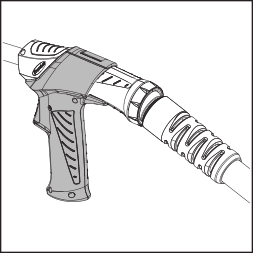
OPT/i T-Handle SET for W6
44,0350,5298
Pistol grip
OPT/i T-Handle SET for W6
44,0350,5298
Heat shield
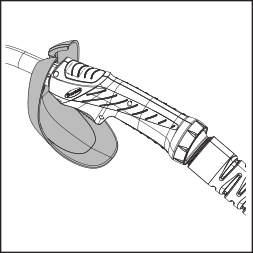
Heat shield
42,0405,0753
Potentiometer
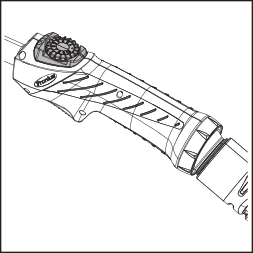
OPT/i Userinterface Poti W6
4,001,796
Additional torch trigger on the top
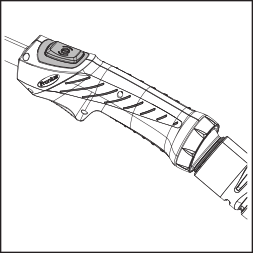
Additional torch trigger on the top
42,0405,0671
4,070,958,Z
43,0004,4062
Extraction Exento
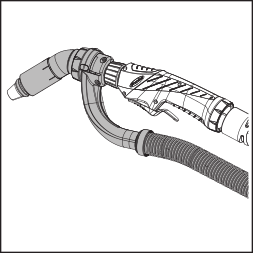
OPT/i Exento Small /5m
44,0350,4078
OPT/i Exento Medium /5m
44,0350,4077
OPT/i Exento MTG400i TD/45°
44,0350,1536
Torch trigger extension
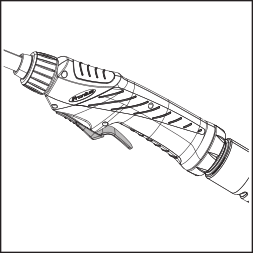
Torch trigger extension
44,0350,5229
Description of available functions
Up/Down-function
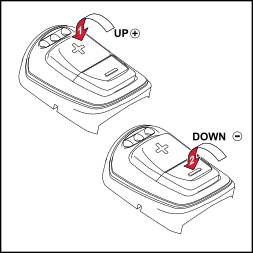
The Up/Down torch has the following functions:
- Changes the welding power in Synergic operation via the Up/Down buttons
- Error display:
- all the LEDs light up red if there is a system fault
- all the LEDs flash red if there is a data communication fault
- Self-test during the run-up sequence:
- all LEDs light up briefly one after the other
Up/Down-function
The Up/Down torch has the following functions:
- Changes the welding power in Synergic operation via the Up/Down buttons
- Error display:
- all the LEDs light up red if there is a system fault
- all the LEDs flash red if there is a data communication fault
- Self-test during the run-up sequence:
- all LEDs light up briefly one after the other
JobMaster-function
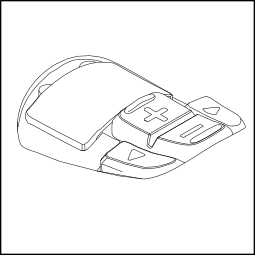
The JobMaster welding torch has the following functions:
- The desired welding parameter on the power source can be selected using the arrow buttons
- The selected welding parameter can be changed using the +/- buttons
- The display shows the current welding parameter and value
Functions of the two-stage torch trigger
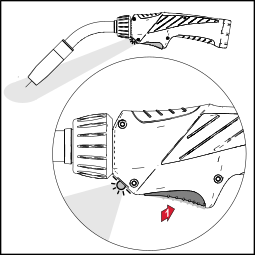
- LED lights up.
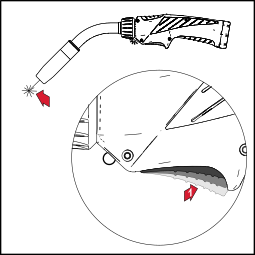
- LED goes out
- Welding starts.
NOTE!
An LED on welding torches with an optional torch trigger on the top will not work.
Special functions
Various special functions can be stored for the torch trigger and for function keys.
For details on the special functions, please refer to the operating instructions for the welding machine.
Variants
TT-SH torch trigger, top - straight torch handle
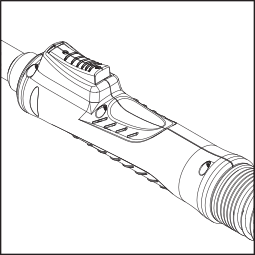
TT-SH with straight torch handle and torch trigger at top
TT-SH torch trigger, top - straight torch handle
TT-SH with straight torch handle and torch trigger at top
Installation and commissioning
MTG d, MTW d - Fitting wearing parts to the torch body
1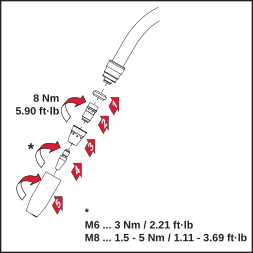
2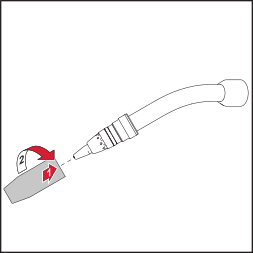
3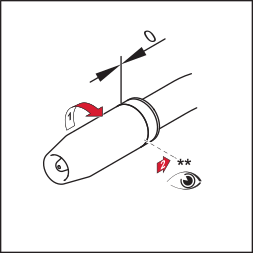
| ** | Screw on and tighten the gas nozzle as far as it will go |
MTG d, MTW d - Fitting wearing parts to the torch body
1
2
3
| ** | Screw on and tighten the gas nozzle as far as it will go |
Variant MTB 200i G / MTB 220i W
Variant MTB 200i G / MTB 220i W:
44,0350,4527
1
2
3
| ** | Screw on and tighten the gas nozzle as far as it will go |
Assembling Multilock welding torches
NOTE!
Risk from incorrect assembly of the welding torch.
This can result in damage to the welding torch.
Before fitting a torch body, ensure that the interface between the torch body and the hosepack is clean and undamaged.
In the case of water-cooled welding torches, increased resistance may arise when tightening the union nut due to the construction of the welding torch.
Always tighten the union nut on the torch body as far as it will go.
1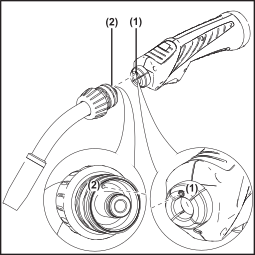
The torch body is in the 0° position when the dowel pin (1) on the hosepack engages in the locating hole (2) in the torch body.
2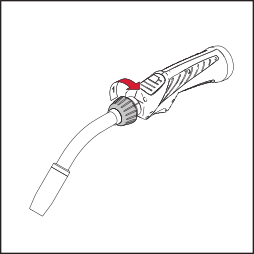
3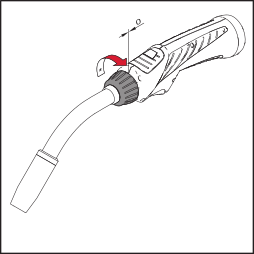
| * | Ensure that the union nut is tightened as far as it will go. |
Note regarding the inner liner with gas-cooled welding torches
NOTE!
Risk due to incorrect inner liner insert.
This can result in poor weld properties.
If a gas-cooled welding torch is used with a plastic inner liner and bronze inner liner insert instead of a steel inner liner, the performance data of the welding torch specified in the technical data is reduced by 30%.
To operate gas-cooled welding torches at maximum power, replace the 40 mm (1.575 in.) inner liner insert with the 320 mm (12,598 in.) inner liner insert.
1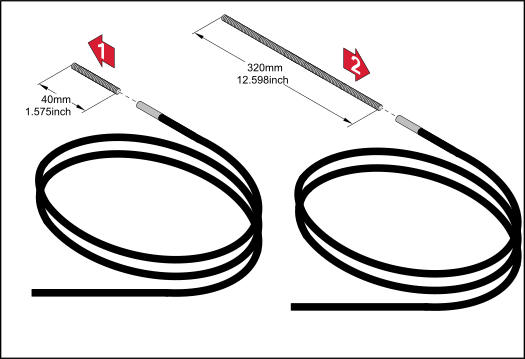
Checking the clamping nipple
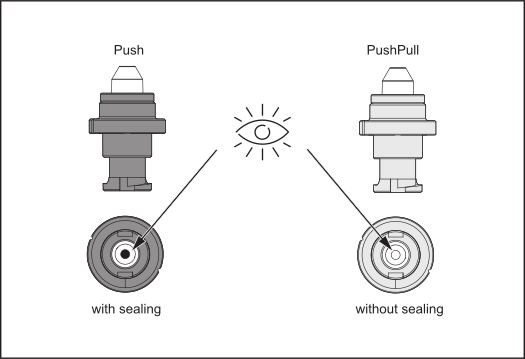
| * | IMPORTANT! Check the clamping nipple before commissioning and every time the inner liner is changed. |
* Carry out a visual inspection for this purpose:
- Left: Brass clamping nipple with sealing disc. You cannot see through the sealing disc.
- Right: Silver clamping nipple with visible hole.
NOTE!
Incorrect or defective clamping nipple for push applications
Gas loss and poor weld properties will result.
Use brass clamping nipples to minimise gas loss.
Check that the sealing disc is intact.
NOTE!
Incorrect clamping nipple for push-pull applications
Wire winder and increased abrasion in the inner liner when using a clamping nipple with sealing disc.
Use the silver clamping nipple to facilitate wire feeding.
Fitting the inner liner inside the torch hosepack
1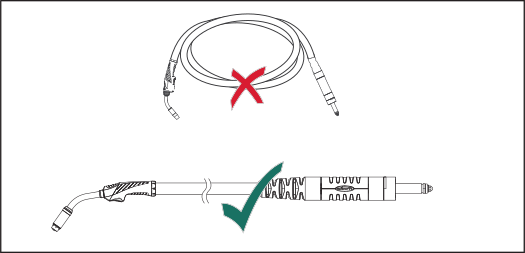
Lay the welding torch out straight
2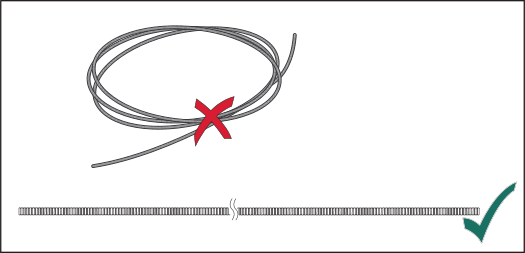
Lay the inner liner out straight
3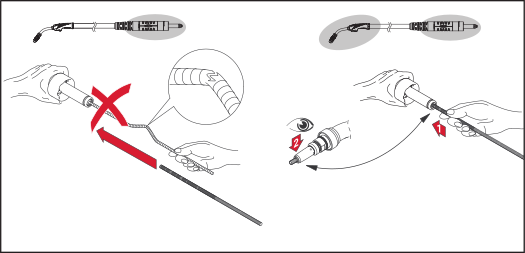
Push the inner liner into the welding torch until it protrudes from the front of the welding torch
4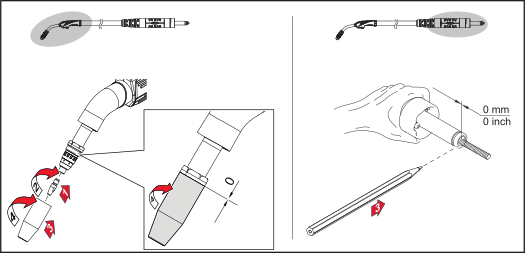
Mark the end of the torch connector on the inner liner
5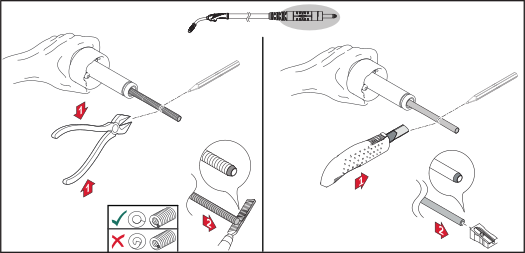
Cut off the inner liner at the marking and deburr; left inner liner made of steel, right inner liner made of plastic
6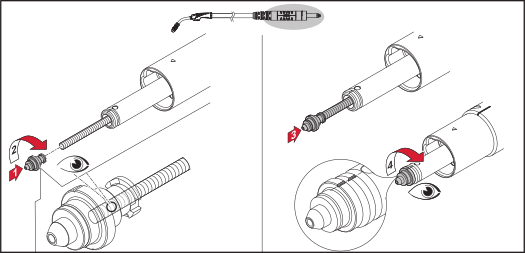
Screw the clamping nipple onto the inner liner as far as it will go. The inner liner must be visible through the hole in the cap
7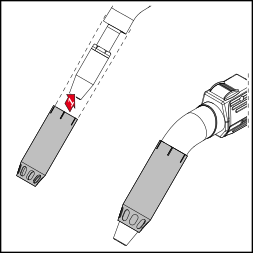
Fit the extraction nozzle
Push the extraction nozzle on as far as it will go.
Connecting the welding torch to the wirefeeder
1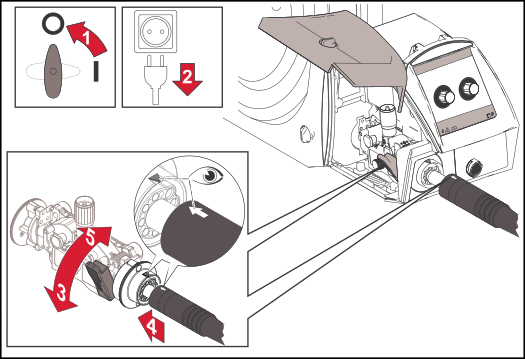
Connecting the welding torch
1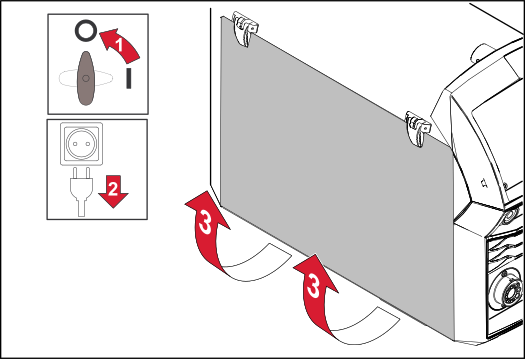
2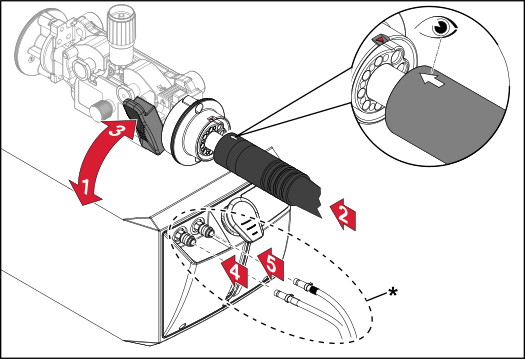
| * | Only if the optional coolant connections are fitted in the cooling unit and when using a water-cooled welding torch. Always connect the coolant hoses according to their colour coding. |
3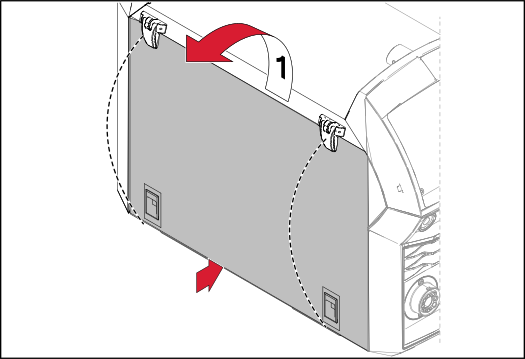
Twisting the Multilock welding torch body
CAUTION!
Risk of burns from hot coolant and hot torch body.
This can result in severe scalds.
Before carrying out any work, allow the coolant and torch body to cool to room temperature (+25 °C, +77 °F).
1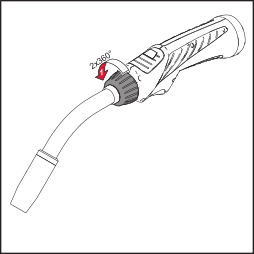
2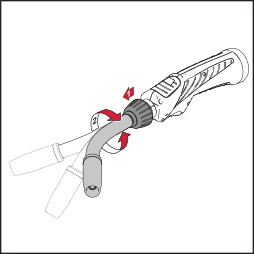
3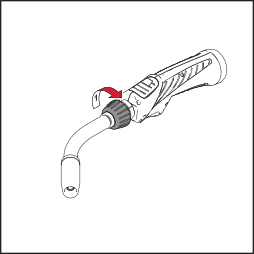
4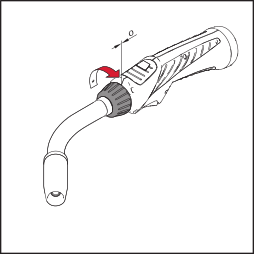
| * | Ensure that the union nut is tightened as far as it will go. |
Changing the torch body on a Multilock welding torch
CAUTION!
Risk of burns from hot coolant and hot torch body.
This can result in severe scalds.
Before carrying out any work, allow the coolant and torch body to cool to room temperature (+25 °C, +77 °F).
Some coolant will always remain in the torch body. Only remove the torch body with the gas nozzle pointing downwards
CAUTION!
Risk from incorrect assembly of the welding torch.
This can result in serious damage to property.
Before fitting a torch body, ensure that the interface between the torch body and the hosepack is clean and undamaged.
1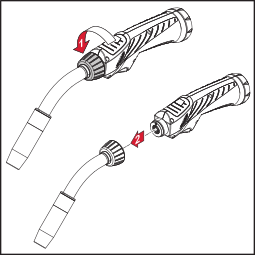
2
The torch body is in the 0° position when the dowel pin (1) on the hosepack engages in the locating hole (2) in the torch body.
3
4
| * | Ensure that the union nut is tightened as far as it will go. |
Care and maintenance
General
Regular preventive maintenance of the welding torch is essential if trouble-free operation is to be ensured. The welding torch is subjected to high temperatures and heavy soiling. The welding torch therefore requires more frequent maintenance than other components in the welding system.
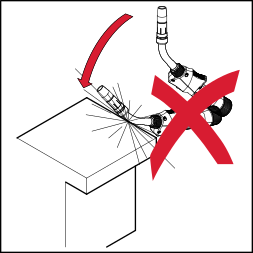
CAUTION!
Risk of damage from improper handling of the welding torch.
This can result in severe damage to property.
Do not strike the welding torch on hard objects.
Avoid scoring and scratches on the contact tip.
Do not bend the torch body under any circumstances.
General
Regular preventive maintenance of the welding torch is essential if trouble-free operation is to be ensured. The welding torch is subjected to high temperatures and heavy soiling. The welding torch therefore requires more frequent maintenance than other components in the welding system.
CAUTION!
Risk of damage from improper handling of the welding torch.
This can result in severe damage to property.
Do not strike the welding torch on hard objects.
Avoid scoring and scratches on the contact tip.
Do not bend the torch body under any circumstances.
Recognising faulty wearing parts

- Insulating parts
- Burned-off outside edges, notches
- Nozzle fittings
- Burned-off outside edges, notches
- Heavily covered in welding spatter
- Spatter guard
- Burned-off outside edges, notches
- Contact tips
- Worn-out (oval) wire entry and wire exit holes
- Heavily covered in welding spatter
- Penetration on the tip of the contact tip
- Gas nozzles
- Heavily covered in welding spatter
- Burned-off outside edges
- Notches
Maintenance at every start-up
- Check wearing parts
- replace faulty wearing parts
- Remove welding spatter from gas nozzle
1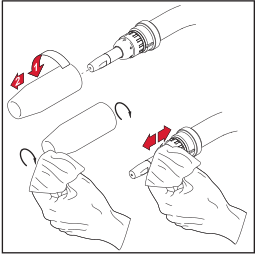
2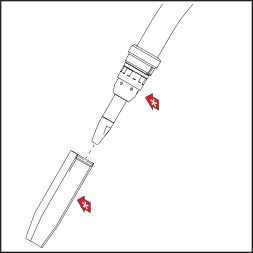
| * | Check the gas nozzle, spatter guard and insulation for damage and replace any damaged components. |
- Also at every start-up when using water-cooled welding torches:
- check all coolant connections for tightness (no leaks)
- check that the coolant can flow unhindered
Maintenance every time the wirespool/basket-type spool is changed
- Clean wirefeeding hose with reduced compressed air
- Recommended: replace the inner liner. Clean the wearing parts before fitting the new inner liner
1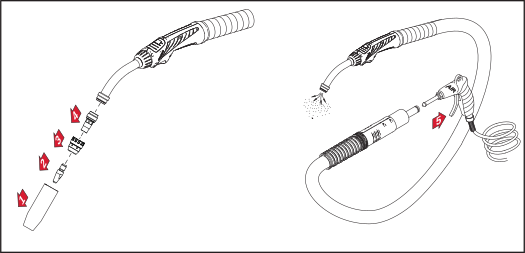
2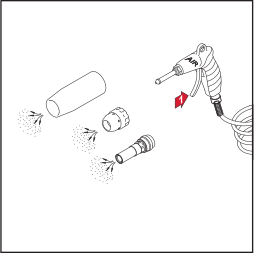
3Fitting wearing parts
- For details on fitting the wearing parts, refer to the section MTG d, MTW d - Fitting wearing parts to the torch body from page (→).
Troubleshooting
Troubleshooting
Troubleshooting
No welding current
Power source mains switch is on, indicators on the power source are lit up, shielding gas available
| Cause: | Grounding (earthing) connection is incorrect |
| Remedy: | Establish a proper grounding (earthing) connection |
| Cause: | There is a break in the current cable in the welding torch |
| Remedy: | Replace welding torch |
Nothing happens when the torch trigger is pressed
Power source mains switch is on, indicators on the power source are lit up
| Cause: | The FSC ('Fronius System Connector' central connector) is not plugged in properly |
| Remedy: | Push on the FSC as far as it will go |
| Cause: | Welding torch or welding torch control line is faulty |
| Remedy: | Replace welding torch |
| Cause: | Interconnecting hosepack faulty or not connected properly |
| Remedy: | Connect interconnecting hosepack properly Replace faulty interconnecting hosepack |
| Cause: | Faulty power source |
| Remedy: | Contact After-Sales Service |
No shielding gas
All other functions are OK
| Cause: | Gas cylinder is empty |
| Remedy: | Change the gas cylinder |
| Cause: | Gas pressure regulator is faulty |
| Remedy: | Replace gas pressure regulator |
| Cause: | The gas hose is not connected, or is damaged or kinked |
| Remedy: | Fit gas hose, lay out straight Replace faulty gas hose |
| Cause: | Welding torch is faulty |
| Remedy: | Replace welding torch |
| Cause: | Gas solenoid valve is faulty |
| Remedy: | Contact After-Sales Service (arrange for gas solenoid valve to be replaced) |
Poor weld properties
| Cause: | Incorrect welding parameters |
| Remedy: | Correct settings |
| Cause: | Poor ground earth connection |
| Remedy: | Ensure good contact to workpiece |
| Cause: | Inadequate or no shielding gas |
| Remedy: | Check the pressure regulator, gas hose, gas solenoid valve and welding torch shielding gas connection. On gas-cooled welding torches, inspect the gas seals, use a suitable inner liner |
| Cause: | Welding torch is leaking |
| Remedy: | Replace welding torch |
| Cause: | Contact tip is too large or worn out |
| Remedy: | Replace contact tip |
| Cause: | Wrong wire alloy or wrong wire diameter |
| Remedy: | Check wirespool/basket-type spool in use |
| Cause: | Wrong wire alloy or wrong wire diameter |
| Remedy: | Check weldability of the base material |
| Cause: | The shielding gas is not suitable for this wire alloy |
| Remedy: | Use the correct shielding gas |
| Cause: | - Contaminated shielding gas (e.g. due to moisture or air) - Inadequate gas shield (e.g. due to draughts) - Unsteady, oxidising weld pool - Contamination in the workpiece (e.g. rust, paint, grease, coatings) - Arc length too short - Irregularities in the wire feeding (e.g. due to clogged inner liner) |
| Remedy: | Optimise the welding conditions |
| Cause: | Shielding gas loss at the clamping nipple |
| Remedy: | Use the correct clamping nipple |
| Cause: | Clamping nipple sealing disc defective, shielding gas loss at the clamping nipple |
| Remedy: | Replace clamping nipple to ensure gas tightness |
| Cause: | Welding spatter in the gas nozzle |
| Remedy: | Remove welding spatter |
| Cause: | Turbulence caused by too high a rate of shielding gas flow |
| Remedy: | Reduce shielding gas flow rate, recommended: Shielding gas flow rate (l/min) = wire diameter (mm) x 10 (e.g. 16 l/min for 1.6 mm wire electrode) |
| Cause: | Too large a distance between the welding torch and the workpiece |
| Remedy: | Reduce the distance between the welding torch and the workpiece (approx. 10 - 15 mm / 0.39 - 0.59 in.) |
| Cause: | Tilt angle of the welding torch is too great |
| Remedy: | Reduce the tilt angle of the welding torch |
| Cause: | Wirefeed components do not match the diameter of the wire electrode / the wire electrode material |
| Remedy: | Use the correct wirefeed components |
Poor wirefeeding
| Cause: | Depending on the system, brake force in wirefeeder or power source set too high |
| Remedy: | Reduce the brake force |
| Cause: | Hole in the contact tip is displaced |
| Remedy: | Change the contact tip |
| Cause: | The inner liner or wire-guide insert is defective |
| Remedy: | Check the inner liner and wire-guide insert for kinks, dirt, etc. Change the defective inner liner or wire-guide insert |
| Cause: | The feed rollers are not suitable for the wire electrode being used |
| Remedy: | Use suitable wirefeeder rollers |
| Cause: | Wirefeeder rollers have the wrong contact pressure |
| Remedy: | Optimise contact pressure |
| Cause: | The wirefeeder rollers are soiled or damaged |
| Remedy: | Clean or replace wirefeeder rollers |
| Cause: | Inner liner wrongly fitted or kinked |
| Remedy: | Replace inner liner |
| Cause: | The inner liner has been cut too short |
| Remedy: | Replace the inner liner and cut the new inner liner to the correct length |
| Cause: | Wire electrode worn due to excessive contact pressure on the wirefeeder rollers |
| Remedy: | Reduce contact pressure on the wirefeeder rollers |
| Cause: | Wire electrode contains impurities or is corroded |
| Remedy: | Use high-quality wire electrode with no impurities |
| Cause: | For steel inner liners: use of uncoated inner liner |
| Remedy: | Use a coated inner liner |
| Cause: | Clamping nipple in wire entry and wire exit area deformed (oval, knocked out), shielding gas escaping at clamping nipple |
| Remedy: | Replace clamping nipple to ensure a gas-tight seal |
The gas nozzle becomes very hot
| Cause: | No thermal dissipation as the gas nozzle is too loose |
| Remedy: | Screw on the gas nozzle as far as it will go |
The welding torch becomes very hot
| Cause: | Only on Multilock welding torches: torch neck union nut is loose |
| Remedy: | Tighten the union nut |
| Cause: | Welding torch operated above the maximum welding current |
| Remedy: | Reduce welding power or use a more powerful welding torch |
| Cause: | The specification of the welding torch is inadequate |
| Remedy: | Observe the duty cycle and loading limits |
| Cause: | Only on water-cooled systems: Inadequate coolant flow |
| Remedy: | Check coolant level, coolant flow, coolant contamination, the routing of the hosepack, etc. |
| Cause: | The tip of the welding torch is too close to the arc |
| Remedy: | Increase stick-out |
Contact tip has a short service life
| Cause: | Incorrect wirefeeder rollers |
| Remedy: | Use correct wirefeeder rollers |
| Cause: | Wire electrode worn due to excessive contact pressure on the wirefeeder rollers |
| Remedy: | Reduce contact pressure on the wirefeeder rollers |
| Cause: | Wire electrode contains impurities/is corroded |
| Remedy: | Use high-quality wire electrode with no impurities |
| Cause: | Uncoated wire electrode |
| Remedy: | Use wire electrode with suitable coating |
| Cause: | Wrong dimension of contact tip |
| Remedy: | Use a contact tip of the correct dimension |
| Cause: | Duty cycle of welding torch has been exceeded |
| Remedy: | Shorten the duty cycle or use a more powerful welding torch |
| Cause: | Contact tip has overheated. No thermal dissipation as the contact tip is too loose |
| Remedy: | Tighten the contact tip |
NOTE!When using CrNi, the contact tip may be subject to a higher degree of wear due to the nature of the surface of the CrNi wire electrode. | |
Torch trigger malfunction
| Cause: | Defective plug connection between welding torch and power source |
| Remedy: | Establish proper plug connections / have power source or welding torch serviced |
| Cause: | Build up of dirt between torch trigger and torch trigger housing |
| Remedy: | Clean away the dirt |
| Cause: | Control line is faulty |
| Remedy: | Contact After-Sales Service |
Weld seam porosity
| Cause: | Spatter build-up in the gas nozzle causing inadequate gas shield for weld seam |
| Remedy: | Remove welding spatter |
| Cause: | Holes in gas hose or hose is not connected properly |
| Remedy: | Replace gas hose |
| Cause: | O-ring on central connector has been cut or is faulty |
| Remedy: | Replace O-ring |
| Cause: | Moisture/condensation in the gas line |
| Remedy: | Dry gas line |
| Cause: | Gas flow is either too high or too low |
| Remedy: | Correct gas flow |
| Cause: | Insufficient gas flow at start or end of welding |
| Remedy: | Increase gas pre-flow and gas post-flow |
| Cause: | Rusty or poor quality wire electrode |
| Remedy: | Use high-quality wire electrode with no impurities |
| Cause: | For gas-cooled welding torches: gas is escaping through a non-insulated inner liner |
| Remedy: | Use only insulated inner liners with gas-cooled welding torches |
| Cause: | Too much parting agent applied |
| Remedy: | Remove excess parting agent/apply less parting agent |
Technical data
General
- for manually-operated welding torches: 113 V
- for mechanically-driven welding torches: 141 V
- Umax = 5 V
- Imax = 10 mA
The torch trigger may only be operated in accordance with the technical data.
The product conforms to the requirements of IEC 60974-7 / - 10 Class A.
General
- for manually-operated welding torches: 113 V
- for mechanically-driven welding torches: 141 V
- Umax = 5 V
- Imax = 10 mA
The torch trigger may only be operated in accordance with the technical data.
The product conforms to the requirements of IEC 60974-7 / - 10 Class A.
Gas-cooled welding torch - MTG 250i, 320i, 400i, 550i
MTG 250i | MTG 320i | ||
|---|---|---|---|
I (ampere) 10 min/40°C | 40% ED* 250 | 40% ED* 320 | |
 | [mm] | 0.8-1.2 | 0.8-1.6 |
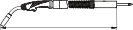 | [m] | 3.5/4.5 | 3.5/4.5 |
*ED = Duty cycle | |||
MTG 250i TT-SH | ||
|---|---|---|
I (ampere) 10 min/40°C | 40% ED* 250 | |
| [mm] | 0.8-1.2 |
| [m] | 3.5/4.5 |
*ED = Duty cycle | ||
| MTG 400i | MTG 550i | |
|---|---|---|---|
I (ampere) 10 min/40°C | - | 30% ED* 550 | |
I (ampere) 10 min/40°C | - | 30% ED* 520 | |
I (ampere) 10 min/40°C | 40% ED* 400 | 60% ED* 420 | |
| [mm] | 0.8-1.6 | 1.2-1.6 |
| [m] | 3.5/4.5 | 3.5/4.5 |
*ED = Duty cycle | |||
Gas-cooled hosepack - MHP 250i, 400i, 550i G ML
|
| MHP 250i G ML | MHP 400i G ML |
|---|---|---|---|
I (ampere) 10 min/40°C | 40% ED* 250 | 40% ED* 400 | |
| [mm] | 0.8-1.2 | 0.8-1.6 |
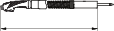 | [m] | 3.35/4.35 | 3.35/4.35 |
*ED = Duty cycle | |||
MHP 550i G ML | ||
|---|---|---|
I (ampere) 10 min/40°C | 30% ED* 550 | |
I (ampere) 10 min/40°C | 30% ED* 520 | |
I (ampere) 10 min/40°C | 60% ED* 420 | |
| [mm] | 1.2-1.6 |
| [m] | 3.35/4.35 |
*ED = Duty cycle | ||
Gas-cooled torch body - MTB 200i, 250i, 320i, 330i, 400i, 550i G ML
| MTB 200i G ML | MTB 250i G ML | |
|---|---|---|---|
I (ampere) 10 min/40°C | 40% ED* 200 | 40% ED* 250 | |
| [mm] | 1.0-1.2 | 0.8-1.2 |
*ED = Duty cycle | |||
| MTB 320i G ML | MTB 330i G ML | |
|---|---|---|---|
I (ampere) 10 min/40°C | 40% ED* 320 | 40% ED* 330 | |
| [mm] | 0.8-1.6 | 0.8-1.6 |
*ED = Duty cycle | |||
| MTB 400i G ML | MTB 550i G ML | |
|---|---|---|---|
I (ampere) 10 min/40°C | - | 30% ED* 550 | |
I (ampere) 10 min/40°C | - | 30% ED* 520 | |
I (ampere) 10 min/40°C | 40% ED* 400 | - | |
| [mm] | 0.8-1.6 | 0.8-1.6 |
*ED = Duty cycle | |||
Water-cooled welding torch - MTW 250i, 400i, 500i, 700i
MTW 250i / TT-SH | MTW 400i / TT-SH | ||
|---|---|---|---|
I (ampere) 10 min/40°C | 100% ED* 250 | 100% ED* 400 | |
| [mm] | 0.8-1.2 | 0.8-1.6 |
| [m] | 3.5/4.5 | 3.5/4.5/6 |
 | 550/600 W | 1200/1500/1300 W | |
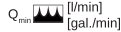 | 1 | 1 | |
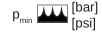 | 3 bar | 3 bar | |
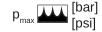 | 5 bar | 5 bar | |
*ED = Duty cycle | |||
**Lowest cooling capacity according to IEC 60974-2 | |||
MTW 500i | MTW 700i | ||
|---|---|---|---|
I (ampere) 10 min/40°C | 100% ED* 500 | 100% ED* 700 | |
| [mm] | 1.0-1.6 | 1.0-1.6 |
| [m] | 3.5/4.5/6 | 3.5/4.5 |
| 1400/1700/2000 W | 1800/2200 W | |
| 1 | 1 | |
| 3 bar | 3 bar | |
| 5 bar | 5 bar | |
*ED = Duty cycle | |||
**Lowest cooling capacity according to IEC 60974-2 | |||
Water-cooled hosepack - MHP 400i, 500i, 700i W ML
MHP 400i W ML TT-SH | ||
|---|---|---|
I (ampere) 10 min/40°C | 100% ED* 400 | |
| [mm] | 0.8-1.6 |
| [m] | 3.35/4.35/5.85 |
| 1200/1500/1300 W | |
| 1 | |
| 3 bar | |
| 5 bar | |
*ED = Duty cycle | ||
**Lowest cooling capacity according to IEC 60974-2 | ||
MHP 500i W ML | MHP 700i W ML | ||
|---|---|---|---|
I (ampere) 10 min/40°C | 100% ED* 500 | 100% ED* 700 | |
| [mm] | 0.8-1.6 | 1.0-1.6 |
| [m] | 3.35/4.35/5.85 | 3.35/4.35 |
| 1400/1700/2000 W | 1800/2200 W | |
| 1 | 1 | |
| 3 bar | 3 bar | |
| 5 bar | 5 bar | |
*ED = Duty cycle | |||
**Lowest cooling capacity according to IEC 60974-2 | |||
Water-cooled torch body - MTB 220i, 250i, 330i, 400i, 500i, 700i W ML
MTB 220i W ML | MTB 250i W ML | ||
|---|---|---|---|
I (ampere) 10 min/40°C | 100% ED* 220 | 100% ED* 250 | |
| [mm] | 1.0-1.2 | 0.8-1.2 |
| 1 | 1 | |
*ED = Duty cycle | |||
MTB 330i W ML | MTB 400i W ML | ||
|---|---|---|---|
I (ampere) 10 min/40°C | 100% ED* 330 | 100% ED* 400 | |
| [mm] | 0.8-1.6 | 0.8-1.6 |
| 1 | 1 | |
*ED = Duty cycle | |||
MTB 500i W ML | MTB 700i W ML | ||
|---|---|---|---|
I (ampere) 10 min/40°C | 100% ED* 500 | 100% ED* 700 | |
| [mm] | 1.0-1.6 | 1.0-1.6 |
| 1 | 1 | |
*ED = Duty cycle | |||