

KD 4000 D-11
downloadControls
Connect the cold wire feeder to the power source
Fitting the welding torch
Inserting/replacing feed rollers
Feeding in the wire electrode
Technical data
Spare parts
The warnings and safety instructions in these instructions are intended to protect people from possible injury and the product from damage.
Indicates an immediately dangerous situation
Serious injury or death will result if appropriate precautions are not taken.
Action step to escape the situation
Indicates a potentially dangerous situation
Death or serious injury may result if appropriate precautions are not taken.
Action step to escape the situation
Indicates a potentially dangerous situation
Minor or moderate injury may result if appropriate precautions are not taken.
Action step to escape the situation
Indicates impaired work results and/or damage to the device and components
The warnings and safety instructions are an integral part of these instructions and must always be observed to ensure the safe and proper use of the product.
The warnings and safety instructions in these instructions are intended to protect people from possible injury and the product from damage.
Indicates an immediately dangerous situation
Serious injury or death will result if appropriate precautions are not taken.
Action step to escape the situation
Indicates a potentially dangerous situation
Death or serious injury may result if appropriate precautions are not taken.
Action step to escape the situation
Indicates a potentially dangerous situation
Minor or moderate injury may result if appropriate precautions are not taken.
Action step to escape the situation
Indicates impaired work results and/or damage to the device and components
The warnings and safety instructions are an integral part of these instructions and must always be observed to ensure the safe and proper use of the product.
The operating instructions must always be at hand wherever the device is being used. In addition to the operating instructions, attention must also be paid to any generally applicable and local regulations regarding accident prevention and environmental protection.
All safety and danger notices on the deviceFor the location of the safety and danger notices on the device, refer to the section headed "General" in the operating instructions for the device.
Before switching on the device, rectify any faults that could compromise safety.
The device is to be used exclusively for its intended purpose.
The device is intended solely for the welding processes specified on the rating plate.
Any use above and beyond this purpose is deemed improper.
The device is designed for use in industry and the workshop. The manufacturer accepts no responsibility for any damage caused through use in a domestic setting.
The manufacturer likewise accepts no liability for inadequate or incorrect results.
Operation or storage of the device outside the stipulated area will be deemed as not in accordance with the intended purpose.
Ambient temperature range:The surrounding air must be free from dust, acids, corrosive gases or substances, etc.
Can be used at altitudes of up to 2000 m (6561 ft. 8.16 in.)
Checks must be carried out at regular intervals to ensure that operators are working in a safety-conscious manner.
Before leaving the workplace, ensure that people or property cannot come to any harm in your absence.
Devices with a higher rating may affect the energy quality of the mains due to their current consumption.
This may affect a number device types in terms of:*) at the interface with the public grid
see "Technical data"
In this case, the plant operator or the person using the device should check whether the device may be connected, where appropriate by discussing the matter with the power supply company.
IMPORTANT! Ensure that the mains connection is earthed properly
The device generates a maximum sound power level of <80 dB(A) (ref. 1pW) when idling and in the cooling phase following operation at the maximum permissible operating point under maximum rated load conditions according to EN 60974-1.
It is not possible to provide a workplace-related emission value during welding (or cutting) as this is influenced by both the process and the environment. All manner of different welding parameters come into play, including the welding process (MIG/MAG, TIG welding), the type of power selected (DC or AC), the power range, the type of weld metal, the resonance characteristics of the workpiece, the workplace environment, etc.
The fumes produced during welding contain harmful gases and vapours.
Welding fumes contain substances that cause cancer, as stated in Monograph 118 of the International Agency for Research on Cancer.
Use at-source extraction and a room extraction system.
If necessary, use a welding torch with an integrated extraction device.
Keep your face away from welding fumes and gases.
Fumes and hazardous gasesEnsure an adequate supply of fresh air. Ensure that there is a ventilation rate of at least 20 m³ per hour at all times.
Otherwise, a welding helmet with an air supply must be worn.
If there is any doubt about whether the extraction capacity is sufficient, the measured toxic emission values should be compared with the permissible limit values.
The following components are responsible, amongst other things, for the degree of toxicity of welding fumes:The relevant material safety data sheets and manufacturer's specifications for the listed components should therefore be studied carefully.
Recommendations for trade fair scenarios, risk management measures and for identifying working conditions can be found on the European Welding Association website under Health & Safety (https://european-welding.org).
Flammable vapours (e.g. solvent fumes) should be kept away from the arc's radiation area.
Close the shielding gas cylinder valve or main gas supply if no welding is taking place.
Flying sparks may cause fires or explosions.
Never weld close to flammable materials.
Flammable materials must be at least 11 metres (36 ft. 1.07 in.) away from the arc, or alternatively covered with an approved cover.
A suitable, tested fire extinguisher must be available and ready for use.
Sparks and pieces of hot metal may also get into adjacent areas through small gaps or openings. Take appropriate precautions to prevent any danger of injury or fire.
Welding must not be performed in areas that are subject to fire or explosion or near sealed tanks, vessels or pipes unless these have been prepared in accordance with the relevant national and international standards.
Do not carry out welding on containers that are being or have been used to store gases, propellants, mineral oils or similar products. Residues pose an explosive hazard.
An electric shock is potentially life threatening and can be fatal.
Do not touch live parts either inside or outside the device.
During MIG/MAG welding and TIG welding, the welding wire, the wire spool, the feed rollers and all pieces of metal that are in contact with the welding wire are live.
Always set the wirefeeder up on a sufficiently insulated surface or use a suitable, insulated wirefeeder holder.
Make sure that you and others are protected with an adequately insulated, dry base or cover for the earth or ground potential. This base or cover must extend over the entire area between the body and the earth or ground potential.
All cables and leads must be secured, undamaged, insulated and adequately dimensioned. Replace loose connections and scorched, damaged, or inadequately dimensioned cables and leads immediately.
Use the handle to ensure the power connections are tight before every use.
In the case of power cables with a bayonet connector, rotate the power cable around the longitudinal axis by at least 180° and pretension.
Do not wrap cables or leads around the body or parts of the body.
The electrode (rod electrode, tungsten electrode, welding wire, etc.) mustDouble the open circuit voltage of a welding system can occur between the welding electrodes of two welding systems. Touching the potentials of both electrodes at the same time may be fatal under certain circumstances.
Arrange for the mains cable to be checked regularly by a qualified electrician to ensure the ground conductor is functioning properly.
Protection class I devices require a mains supply with ground conductor and a connector system with ground conductor contact for proper operation.
Operation of the device on a mains supply without ground conductor and on a socket without ground conductor contact is only permitted if all national regulations for protective separation are observed.
Otherwise, this is considered gross negligence.
If necessary, provide adequate earthing for the workpiece.
Switch off unused devices.
Wear a safety harness if working at height.
Before working on the device, switch it off and pull out the mains plug.
Attach a clearly legible and easy-to-understand warning sign to the device to prevent anyone from plugging the mains plug back in and switching it on again.
After opening the device:If work on live parts is required, have a second person switch off the main switch at the right moment.
Ensure that the workpiece is held securely by the workpiece clamp.
Attach the workpiece clamp as close as possible to the area that is to be welded.
Position the device with sufficient insulation against electrically conductive environments, such as insulation against conductive floor or insulation to conductive racks.
If power distribution boards, twin-head mounts, etc., are being used, note the following: The electrode of the welding torch / electrode holder that is not used is also live. Make sure that the welding torch / electrode holder that is not used is kept sufficiently insulated.
In the case of automated MIG/MAG applications, ensure that only an insulated wire electrode is routed from the welding wire drum, large wirefeeder spool or wirespool to the wirefeeder.
EMC device classification as per the rating plate or technical data.
In certain cases, even though a device complies with the standard limit values for emissions, it may affect the application area for which it was designed (e.g. when there is sensitive equipment at the same location, or if the site where the device is installed is close to either radio or television receivers).
If this is the case, then the operator is obliged to take appropriate action to rectify the situation.
Do not reach into the rotating cogs of the wire drive or into rotating drive components.
Covers and side panels may only be opened/removed while maintenance or repair work is being carried out.
During operationThe welding wire emerging from the welding torch poses a high risk of injury (piercing of the hand, injuries to the face and eyes, etc.).
Therefore, always keep the welding torch facing away from the body (devices with wirefeeder) and wear suitable protective goggles.
Never touch the workpiece during or after welding - risk of burns.
Slag can jump off cooling workpieces. The specified protective equipment must therefore also be worn when reworking workpieces, and steps must be taken to ensure that other people are also adequately protected.
Welding torches and other parts with a high operating temperature must be allowed to cool down before handling.
Special provisions apply in areas at risk of fire or explosion
- observe relevant national and international regulations.
Welding machines for work in areas with increased electrical risk (e.g. near boilers) must carry the 'Safety' sign. However, the welding machine must not be located in such areas.
Risk of scalding from escaping coolant. Switch off cooling unit before disconnecting coolant flow or return lines.
Observe the information on the coolant safety data sheet when handling coolant. The coolant safety data sheet may be obtained from your service centre or downloaded from the manufacturer's website.
Use only suitable load-carrying equipment supplied by the manufacturer when transporting devices by crane.
If the wirefeeder is attached to a crane holder during welding, always use a suitable, insulated wirefeeder hoisting attachment (MIG/MAG and TIG devices).
Welding with the device during crane transport is only permitted if this is clearly stated in the intended use of the device.
If the device has a carrying strap or handle, this is intended solely for carrying by hand. The carrying strap is not to be used if transporting with a crane, counterbalanced lift truck or other mechanical hoist.
All lifting tackle (straps, handles, chains, etc.) used in connection with the device or its components must be tested regularly (e.g. for mechanical damage, corrosion or changes caused by other environmental factors).
The testing interval and scope of testing must comply with applicable national standards and directives as a minimum.
Odourless and colourless shielding gas may escape unnoticed if an adapter is used for the shielding gas connection. Prior to assembly, seal the device-side thread of the adapter for the shielding gas connection using suitable Teflon tape.
Use filters if necessary.
Shielding gas cylinders contain gas under pressure and can explode if damaged. As the shielding gas cylinders are part of the welding equipment, they must be handled with the greatest of care.
Protect shielding gas cylinders containing compressed gas from excessive heat, mechanical impact, slag, naked flames, sparks and arcs.
Mount the shielding gas cylinders vertically and secure according to instructions to prevent them falling over.
Keep the shielding gas cylinders well away from any welding or other electrical circuits.
Never hang a welding torch on a shielding gas cylinder.
Never touch a shielding gas cylinder with an electrode.
Risk of explosion - never attempt to weld a pressurised shielding gas cylinder.
Only use shielding gas cylinders suitable for the application in hand, along with the correct and appropriate accessories (regulator, hoses and fittings). Only use shielding gas cylinders and accessories that are in good condition.
Turn your face to one side when opening the valve of a shielding gas cylinder.
Close the shielding gas cylinder valve if no welding is taking place.
If the shielding gas cylinder is not connected, leave the valve cap in place on the cylinder.
The manufacturer's instructions must be observed as well as applicable national and international regulations for shielding gas cylinders and accessories.
Risk of suffocation from the uncontrolled escape of shielding gas
Shielding gas is colourless and odourless and, in the event of a leak, can displace the oxygen in the ambient air.
Use internal directives and checks to ensure that the workplace environment is always clean and clearly laid out.
Only set up and operate the device in accordance with the degree of protection shown on the rating plate.
When setting up the device, ensure there is an all-round clearance of 0.5 m (1 ft. 7.69 in.) to ensure that cooling air can flow in and out freely.
When transporting the device, observe the relevant national and local guidelines and accident prevention regulations. This applies especially to guidelines regarding the risks arising during transport.
Do not lift or transport operational devices. Switch off and disconnect devices from the grid before transport or lifting.
Before transporting the device, allow coolant to drain completely and detach the following components:After transporting the device, the device must be visually inspected for damage before commissioning. Any damage must be repaired by trained service technicians before commissioning the device.
Any safety devices that are not functioning properly must be repaired before switching on the device.
Never bypass or disable safety devices.
Before switching on the device, ensure that no one is likely to be endangered.
Check the device at least once a week for obvious damage and proper functioning of safety devices.
Always fasten the shielding gas cylinder securely and remove it beforehand if the device is to be transported by crane.
Only the manufacturer's original coolant is suitable for use with our devices due to its properties (electrical conductibility, anti-freeze agent, material compatibility, flammability, etc.).
Only use suitable original coolant from the manufacturer.
Do not mix the manufacturer's original coolant with other coolants.
Only connect the manufacturer's system components to the cooling circuit.
Cooling Liquid FCL 10/20 does not ignite. The ethanol-based coolant can ignite under certain conditions. Transport the coolant only in its original, sealed containers and keep well away from any sources of ignition.
Used coolant must be disposed of properly in accordance with the relevant national and international regulations. The coolant safety data sheet may be obtained from your service centre or downloaded from the manufacturer's website.
Check the coolant level before starting to weld, while the system is still cool.
It is impossible to guarantee that bought-in parts are designed and manufactured to meet the demands made of them, or that they satisfy safety requirements.
The housing screws provide the ground conductor connection for earthing the housing parts.
Only use original housing screws in the correct number and tightened to the specified torque.
The manufacturer recommends that a safety inspection of the device be performed at least once every 12 months.
The manufacturer recommends that the welding machines be calibrated at the same 12-monthly interval.
A safety inspection should be carried out by a qualified electricianFor safety inspections, follow the appropriate national and international standards and directives.
Further details on the safety inspection and calibration can be obtained from your Fronius branch or your Fronius partner. They will provide you with any documents you may require, on request.
Waste electrical and electronic equipment must be collected separately and recycled in an environmentally responsible manner in accordance with the EU Directive and national law. Used equipment must be returned to the distributor or through a local, authorised collection and disposal system. Correct disposal of the used device promotes sustainable recycling of resources and prevents negative effects on health and the environment.
Packaging materialsThe full text of the EU Declaration of Conformity can be found at
https://www.fronius.com .
Devices with the CSA mark satisfy the requirements of the relevant standards in Canada and the USA.
Copyright of these operating instructions remains with the manufacturer.
Text and illustrations were accurate at the time of printing, subject to change.
We are grateful for suggestions for improvement and information regarding any discrepancies in the operating instructions.
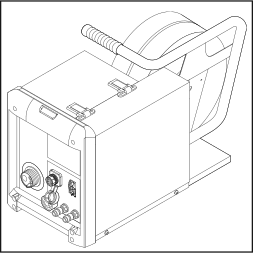
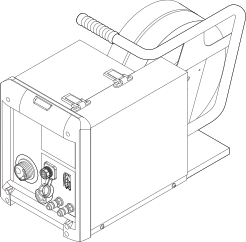
The cold wire feeder is designed to be used with wirespools of max. 300 mm (11.81 in) diameter. The standard 4-roller drive has good wirefeeding properties. The cold wire feeder is also suitable for long hosepacks and,
due to its compact size, can be used in many different ways.
The cold wire feeder is designed to be used with wirespools of max. 300 mm (11.81 in) diameter. The standard 4-roller drive has good wirefeeding properties. The cold wire feeder is also suitable for long hosepacks and,
due to its compact size, can be used in many different ways.
The KD 4000 D can be used for all types of TIG welding and is especially suited to robot applications and automated tasks. The cold wire feeder is suitable for all standard shielding gases.
The cold wire feeder has safety symbols on the rating plate. These safety symbols must not be removed or painted over. The symbols warn against operating the equipment incorrectly, as this may result in serious injury and damage.
 | Do not use the functions described here until you have fully read and understood the following documents:
|
 | Welding is dangerous. The following basic requirements must be met:
|
Owing to software updates, you may find that your machine has certain functions that are not described in these Operating Instructions, or vice-versa. Certain illustrations may also differ slightly from the actual controls on your device, but these controls function in exactly the same way.
Owing to software updates, you may find that your machine has certain functions that are not described in these Operating Instructions, or vice-versa. Certain illustrations may also differ slightly from the actual controls on your device, but these controls function in exactly the same way.
Danger due to incorrect operation and incorrectly performed work.
This can result in serious injury and damage to property.
All the work and functions described in this document must only be carried out by technically trained and qualified personnel.
Fully read and understand this document.
Read and understand all safety rules and user documentation for this device and all system components.
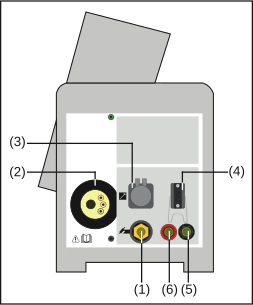
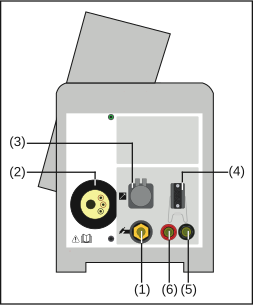
| (1) | Welding torch / (-) current socket connection in conjunction with a MagicWave power source for connecting:
in conjunction with a TransTig power source for connecting:
|
| (2) | Wirefeeding connection |
| (3) | LocalNet connection standardised connection socket for system extensions (e.g. remote control, JobMaster welding torch, etc.) |
| (4) | Torch control connection for connecting the torch control plug |
| (5) | Water flow connection (blue) |
| (6) | Coolant return-flow connection socket (red) |
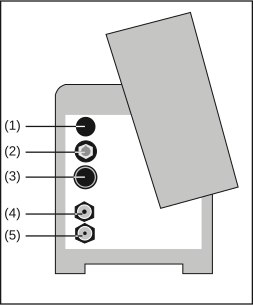
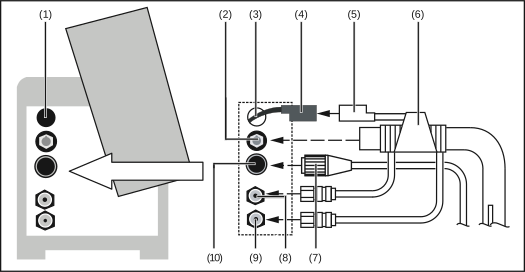
| (1) | Bushing for control socket for connecting a welding torch with a conventional control plug |
| (2) | (+) socket with bayonet latch |
| (3) | LocalNet connection Interconnecting hosepack |
| (4) | Coolant return-flow connection socket (red) Interconnecting hosepack |
| (5) | Water flow connection (blue) Interconnecting hosepack |
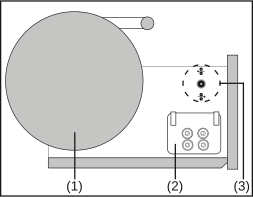
| (1) | Welding torch / (-) current socket connection for attaching standardised welding wire spools up to max.16 kg (35.27 lbs.) and with a maximum diameter of 300 mm (11.81 in.) |
| (2) | 4-roller drive |
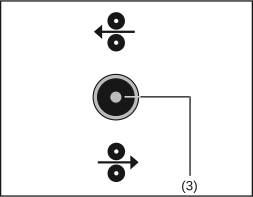
| (3) | "Feeder inching/feeder backward" button
|
To facilitate exact positioning of the welding wire, the following sequence is executed when the welder presses and holds the wire threading / wire retract button (3):
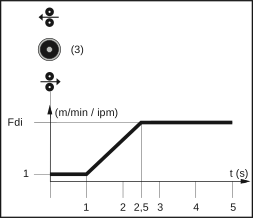
IMPORTANT! For more detailed information on the Fdi parameter, please refer to the Operating Instructions for the power source.
If the wire threading button is released (1) before one second has elapsed and then press it again, the sequence starts again from the beginning. This makes it possible to position the wire continuously at the low wire speed of 1 m/min or 39.37 ipm when needed.
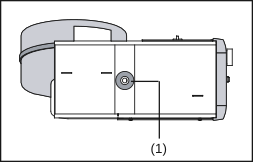
| (1) | Receiving socket for receptor pin for placing the cold wire feeder on the wirefeeder receptor pin |
If the TransTig 4000/5000 and MagicWave 4000/5000 power sources have been fixed onto a trolley with cooling unit, the cold wire feeder can be placed on the optional wirefeeder holder on the trolley.
If the TransTig 4000/5000 and MagicWave 4000/5000 power sources have been fixed onto a trolley with cooling unit, the cold wire feeder can be placed on the optional wirefeeder holder on the trolley.
Danger from falling cold wire feeder.
This can result in serious injury and damage to property.
Check that the cold wire feeder is securely placed on the receptor pin.
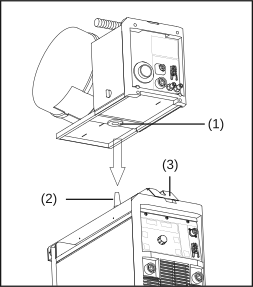
The cold wire feeder is connected to the power source using the interconnecting hosepack.
The cold wire feeder is connected to the power source using the interconnecting hosepack.
Danger from incorrect installation
This can result in serious injury and damage to property.
Do not carry out the steps described here until you have read and completely understood all the Operating Instructions
Risk of injury from springiness of spooled welding wire.
This can result in serious injury and damage to property.
When threading in the welding wire, hold the end of it firmly, to prevent any injuries that might be caused by the wire flicking back.
Risk of injury from springiness of spooled welding wire.
This can result in serious injury and damage to property.
When threading in the welding wire, hold the end of it firmly, to prevent any injuries that might be caused by the wire flicking back.
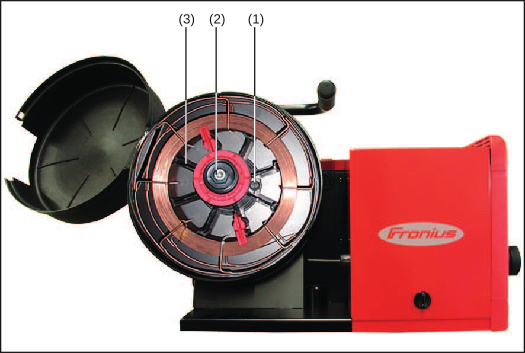
Always adjust the brake so that the wirespool does not continue unreeling after the end of welding - but without overtightening the clamping screw, as this might cause motor overload.
Danger from incorrect installation
This can result in serious injury and damage to property.
Do not carry out the steps described here until you have read and completely understood all the Operating Instructions
Danger of injury and damage from falling wirespool.
This can result in serious injury and damage to property.
Make sure the wirespool sits securely on the wirespool holder
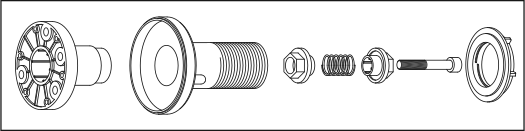
To ensure that the wirespool is properly in place and that the brake works properly, fit the brake according to the following diagram.
In order to achieve optimum wire electrode feed, the feed rollers must be suitable for the diameter and alloy of the wire being welded.
IMPORTANT! Only use feed rollers that match the wire electrode.
An overview of the feed rollers available and their possible areas of use can be found in the spare parts lists.
In order to achieve optimum wire electrode feed, the feed rollers must be suitable for the diameter and alloy of the wire being welded.
IMPORTANT! Only use feed rollers that match the wire electrode.
An overview of the feed rollers available and their possible areas of use can be found in the spare parts lists.
In the USA, all wirefeeders are delivered without feed rollers. After inserting the wirespool, the feed rollers must be inserted into the wirefeeder.
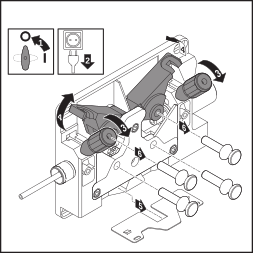
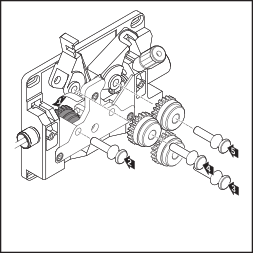
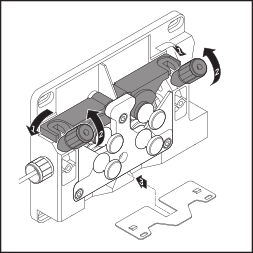
Danger from springiness of spooled wire electrode.
This can result in severe injuries.
When inserting the wirespool/basket-type spool, hold the end of the wire electrode firmly to avoid injuries caused by the wire electrode springing back.
Danger from falling wirespool/basket-type spool.
This can result in severe injuries.
Make sure that the wirespool or basket-type spool with adapter is fitted securely to the wirespool holder.
Danger from springiness of spooled wire electrode.
This can result in severe injuries.
When inserting the wirespool/basket-type spool, hold the end of the wire electrode firmly to avoid injuries caused by the wire electrode springing back.
Danger from falling wirespool/basket-type spool.
This can result in severe injuries.
Make sure that the wirespool or basket-type spool with adapter is fitted securely to the wirespool holder.
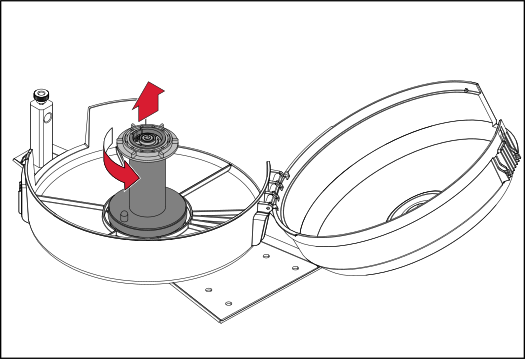
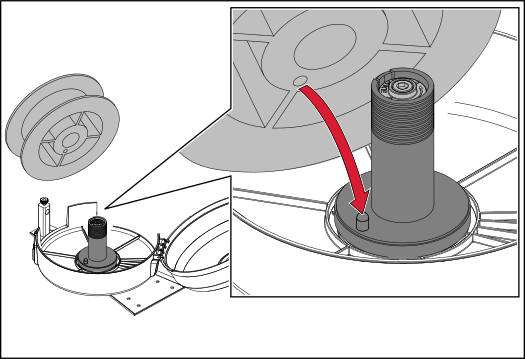
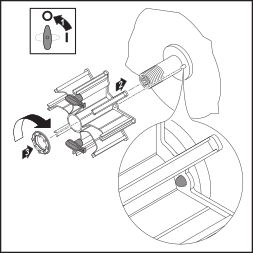
Danger from falling wirespool/basket-type spool.
This can result in serious personal injury and damage to property.
Ensure that the wirespool/basket-type spool including basket-type spool adapter is always firmly seated on the wirespool holder.
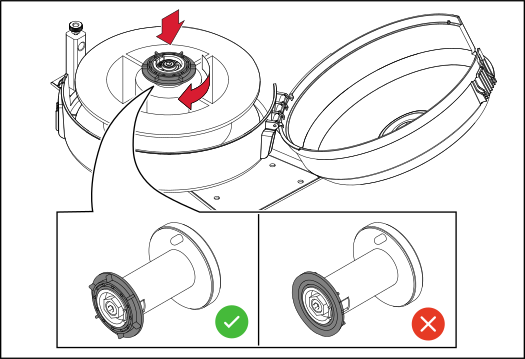
When working with basket-type spools, use only the basket-type spool adapter supplied with the wire-feed unit! USA wire-feed units are supplied without basket-type spool adapters.
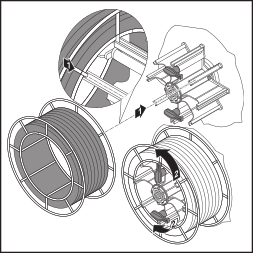
Danger from falling basket-type spool.
This can result in serious injury and damage to property.
Place the basket-type spool on the adapter provided in such a way that the bars on the spool are inside the adapter guideways.
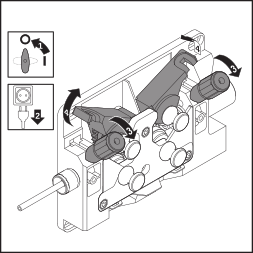
Danger from elasticity of the spooled wire electrode.
This can result in serious injury and damage to property.
When inserting the wire electrode into the 4-roller drive, hold the end of the wire electrode firmly to avoid injuries caused by the wire springing back.
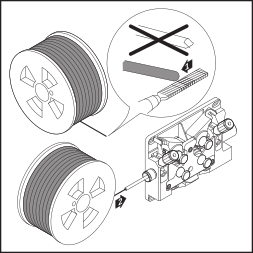
Danger from sharp end of wire electrode.
This may result in damage to the welding torch.
Deburr the end of the wire electrode well before threading in.
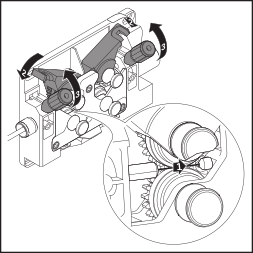
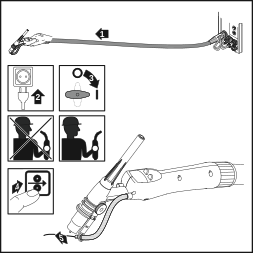
Risk of injury from emerging wire electrode.
This can result in serious injury.
When pressing the wire threading button or the torch trigger, keep the welding torch away from your face and body, and wear suitable protective goggles.
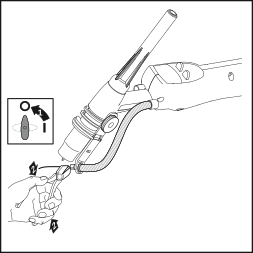
Danger from elasticity of the spooled wire electrode.
This can result in serious injury and damage to property.
When inserting the wire electrode into the 4-roller drive, hold the end of the wire electrode firmly to avoid injuries caused by the wire springing back.
Danger from sharp end of wire electrode.
This may result in damage to the welding torch.
Deburr the end of the wire electrode well before threading in.
Risk of injury from emerging wire electrode.
This can result in serious injury.
When pressing the wire threading button or the torch trigger, keep the welding torch away from your face and body, and wear suitable protective goggles.
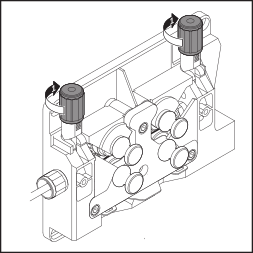
Set the contact pressure in such a way that the wire electrode is not deformed but nevertheless ensures proper wirefeeding.
Contact pressure standard values | Semi-cylindrical rolls | Trapeze | Plastic |
|---|---|---|---|
Aluminium | 1.5 | - | 3.5 - 4.5 |
Steel | 3 - 4 | 1.5 | - |
CrNi | 3 - 4 | 1.5 | - |
After releasing the torch trigger the wirespool should stop unreeling.
Adjust brake if necessary.
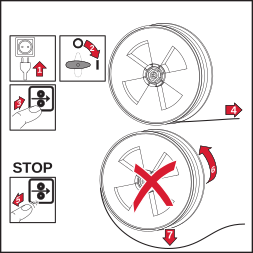
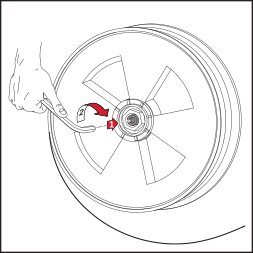
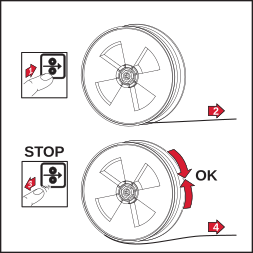
After releasing the torch trigger the wirespool should stop unreeling.
Adjust brake if necessary.
The push-pull unit must be calibrated prior to each initial start-up and each time the cold wire feeder software is updated. If the push-pull unit is not calibrated, the default parameters will be used - which may result in unsatisfactory welding results.
The push-pull unit must be calibrated prior to each initial start-up and each time the cold wire feeder software is updated. If the push-pull unit is not calibrated, the default parameters will be used - which may result in unsatisfactory welding results.

For an overview of the error messages that may occur during calibration of the push-pull unit, please refer to "Service codes for push-pull calibration".

0 ...... Fronius KD7000/VR1530KD Drive 22 m/min or 866 ipm *)
2 ...... Fronius Torch Drive 10 m/min or 394 ipm *)
3 ...... Fronius Torch Drive 22 m/min or 866 ipm *)
15 .... Fronius KD7000/VR1530KD Drive 10 m/min or 394 ipm
18 .... Fronius Torch Drive 5 m/min or 197 ipm
19 .... Fronius KD4010 10 m/min or 394 ipm
21 .... Binzel Torch Drive IWG 8 m/min or 315 ipm **)
25 .... Fronius KD4000/KD7000 Drive 11 m/min or 433 ipm *)
| *) | No calibration under load (St2) is required |
| **) | Motor and gear tolerances may cause functional anomalies. Calibration may have to be carried out by Fronius |

Risk of injury from rotating cogs and drive parts.
Keep hands away from rotating cogs and the wire drive.

The wirefeeder motors are calibrated while not under load;
during calibration, the right-hand display will read "run".

As soon as calibration - in the unloaded state - is complete, the display will read "St2".
Risk of injury from welding wire emerging at speed and from rotating cogs and drive parts.
Keep the welding torch away from your face and body. Keep hands away from rotating cogs and the wire drive.

The wirefeeder motors are calibrated while under load; during calibration, the right-hand display will read "run".
If the push-pull unit does not need to be calibrated while under load (St2), the previously set values (e.g. "PPU" and "2") will appear in the display when you press the feeder inching or gas test button.
Calibration of the push-pull unit is complete when the previously set values - e.g. "PPU" and "2" - reappear on the display.
Danger from electrical current.
This can result in serious personal injury and damage to property.
Before starting work, switch off all devices and components involved and disconnect them from the grid.
Secure all devices and components involved so they cannot be switched back on.
After opening the device, use a suitable measuring instrument to check that electrically charged components (such as capacitors) have been discharged.
Danger due to insufficient ground conductor connection.
This can result in serious personal injury and damage to property.
The housing screws provide a suitable ground conductor connection for grounding the housing.
The housing screws must not under any circumstances be replaced by other screws without a reliable ground conductor connection.
Danger from electrical current.
This can result in serious personal injury and damage to property.
Before starting work, switch off all devices and components involved and disconnect them from the grid.
Secure all devices and components involved so they cannot be switched back on.
After opening the device, use a suitable measuring instrument to check that electrically charged components (such as capacitors) have been discharged.
Danger due to insufficient ground conductor connection.
This can result in serious personal injury and damage to property.
The housing screws provide a suitable ground conductor connection for grounding the housing.
The housing screws must not under any circumstances be replaced by other screws without a reliable ground conductor connection.
| Cause: | Incorrect measurement during push-pull calibration |
| Remedy: | Repeat push-pull calibration |
| Cause: | At minimum wire speed, the cold wire feeder motor does not deliver any actual rotational speed value. |
| Remedy: | Repeat the push-pull calibration. If the error message re-appears: Contact After-Sales Service. |
| Cause: | At maximum wire speed, the cold wire feeder motor does not deliver any actual rotational speed value. |
| Remedy: | Repeat the push-pull calibration. If the error message re-appears: Contact After-Sales Service. |
| Cause: | At minimum wire speed, the cold wire feeder motor does not deliver any actual rotational speed value. |
| Remedy: | Repeat the push-pull calibration. If the error message re-appears: Contact After-Sales Service. |
| Cause: | At minimum wire feed speed, the motor of the push-pull unit does not deliver any actual rotational speed value. |
| Remedy: | Repeat the push-pull calibration. If the error message re-appears: Contact After-Sales Service. |
| Cause: | At maximum wire speed, the cold wire feeder motor does not deliver any actual rotational speed value. |
| Remedy: | Repeat the push-pull calibration. If the error message re-appears: Contact After-Sales Service. |
| Cause: | At maximum wire feed speed, the motor of the push-pull unit does not deliver any actual rotational speed value. |
| Remedy: | Repeat the push-pull calibration. If the error message re-appears: Contact After-Sales Service. |
| Cause: | Push-pull calibration was interrupted: Quick-stop was activated by pressing the torch trigger. |
| Remedy: | Repeat push-pull calibration |
| Cause: | "Push-pull calibration - open-circuit" has not been carried out |
| Remedy: | Carry out "push-pull calibration - open-circuit" |
| Cause: | At minimum wire feed speed, the wire-feed unit motor does not deliver any actual rotational speed value. |
| Remedy: | Repeat the push-pull calibration. If the error message re-appears: Contact After-Sales Service. |
| Cause: | At minimum wire feed speed, the motor of the push-pull unit does not deliver any actual rotational speed value. |
| Remedy: | Repeat the push-pull calibration. If the error message re-appears: Contact After-Sales Service. |
| Cause: | At minimum wire feed speed, the motor current of the wire-feed unit motor is outside the permitted range. Possible reasons are disengaged wire-feed unit motors or wire feed problems. |
| Remedy: | Engage the drive units of both wire-feed unit motors, arrange the hosepack in as straight a line as possible; check the inner liner for kinks or soiling; check the contact pressure on the 2-roller or 4-roller drive of the push-pull unit. Repeat the push-pull calibration. If the error message re-appears: Contact After-Sales Service. |
| Cause: | At minimum wire feed speed, the motor current of the push-pull unit is outside the permitted range. Possible reasons are disengaged wire-feed unit motors or wire feed problems. |
| Remedy: | Engage the drive units of both wire-feed unit motors, arrange the hosepack in as straight a line as possible; check the inner liner for kinks or soiling; check the contact pressure on the 2-roller or 4-roller drive of the push-pull unit. Repeat the push-pull calibration. If the error message re-appears: Contact After-Sales Service. |
| Cause: | At maximum wire feed speed, the wire-feed motor does not deliver any actual rotational speed value. |
| Remedy: | Repeat the push-pull calibration. If the error message re-appears: Contact After-Sales Service. |
| Cause: | At maximum wire feed speed, the motor of the push-pull unit does not deliver any actual rotational speed value. |
| Remedy: | Repeat the push-pull calibration. If the error message re-appears: Contact After-Sales Service (faulty actual-value pick-up) |
| Cause: | At maximum wire feed speed, the motor current of the wire-feed unit motor is outside the permitted range. Possible reasons are disengaged wire-feed unit motors or wire feed problems. |
| Remedy: | Engage the drive units of both wire-feed unit motors, arrange the hosepack in as straight a line as possible; check the inner liner for kinks or soiling; check the contact pressure on the 2-roller or 4-roller drive of the push-pull unit. Repeat the push-pull calibration. If the error message re-appears: Contact After-Sales Service |
| Cause: | At maximum wire feed speed, the motor current of the push-pull unit is outside the permitted range. Possible reasons are disengaged wire-feed unit motors or wire feed problems. |
| Remedy: | Engage the drive units of both wire-feed unit motors, arrange the hosepack in as straight a line as possible; check the inner liner for kinks or soiling; check the contact pressure on the 2-roller or 4-roller drive of the push-pull unit. Repeat the push-pull calibration. If the error message re-appears: Contact After-Sales Service. |
| Cause: | Push-pull calibration was interrupted: Quick-stop was activated by pressing the torch trigger. |
| Remedy: | Repeat push-pull calibration |
| Cause: | Fault in the wire feed system (overcurrent in wire-feed unit drive) |
| Remedy: | Arrange the hosepack in as straight a line as possible; check that there are no kinks or dirt in the inner liner; check the contact pressure on the 2-roller (or 4-roller) drive |
| Cause: | Wire-feed unit motor is sticking or defective |
| Remedy: | Check or replace the wire-feed unit motor |
| Cause: | Fault in the wirefeed system (overcurrent in push-pull unit drive) |
| Remedy: | Arrange the hosepack in as straight a line as possible; check that there are no kinks or dirt in the inner liner; check the contact pressure on the 2-roller or 4-roller drive of the push-pull unit |
| Cause: | Fault in the wire feed system (overcurrent in wire-feed unit drive) |
| Remedy: | Arrange the hosepack in as straight a line as possible; check that there are no kinks or dirt in the inner liner; check the contact pressure on the 2-roller (or 4-roller) drive |
| Cause: | The external supply voltage has dropped below the tolerance range |
| Remedy: | Check the external supply voltage |
| Cause: | Wire-feed unit motor is sticking or defective |
| Remedy: | Check or replace the wire-feed unit motor |
| Cause: | The external supply voltage has exceeded the upper limit of the tolerance range |
| Remedy: | Check the external supply voltage |
| Cause: | No actual rotational speed value from the wire-feed unit motor |
| Remedy: | Check the actual-value pick-up and the cable connections to and from it, and replace if necessary |
| Cause: | No actual value rotational speed from the push-pull unit motor |
| Remedy: | Check the actual-value pick-up and the cable connections to and from it, and replace if necessary |
| Cause: | Counter lever on main wire-feed unit open |
| Remedy: | Close counter lever on main wire-feed unit Acknowledge service code using Feeder inching button |
| Cause: | Main wire-feed unit slipping |
| Remedy: | Check wearing parts on wire-feed unit Use suitable feed rollers Decrease wire braking force Increase contact pressure on main wire-feed unit Acknowledge service code using Feeder inching button |
| Cause: | End of wire reached |
| Remedy: | Check whether sufficient wire is available Acknowledge service code using Feeder inching button |
| Cause: | Counter lever on push-pull unit open |
| Remedy: | Close counter lever on push-pull unit Acknowledge service code using Feeder inching button |
| Cause: | Push-pull unit slipping |
| Remedy: | Check wearing parts for wire feeding Use suitable feed rollers Increase contact pressure on the push-pull unit Acknowledge service code using the Feeder inching button" |
| Cause: | Arc not igniting due to inadequate ground (earth) connection |
| Remedy: | Check the ground (earth) connection Acknowledge service code using the Feeder inching button |
| Cause: | Arc not igniting due to the wrong welding program setting |
| Remedy: | Select wire diameter and material type in accordance with the material used (select a suitable welding program). Acknowledge service code using the Feeder inching button |
| Cause: | Connection to wire buffer missing |
| Remedy: | Check connection to wire buffer, check wire buffer control line |
| Cause: | The "Wire-end check" option has detected the end of the wire electrode |
| Remedy: | Insert a new wirespool and feed the wire electrode into the hosepack; acknowledge Err | 056 by pressing the Store button |
| Cause: | Additional fan filter of the KD 4000 D-11 is contaminated air supply for the additional fan is no longer sufficient to cool the power electronics - the power electronics temperature switch has tripped |
| Remedy: | Clean filter or replace; acknowledge Err | 056 by pressing the Store button |
| Cause: | Ambient temperature too high on the KD 4000 D-11 |
| Remedy: | Reduce ambient temperature if necessary position and operate welding machine at a cooler location; acknowledge Err | 056 by pressing the Store button |
| Cause: | Excessive motor current on the KD 4000 D-11, e.g. due to wirefeed problems or an inadequately dimensioned wirefeeder for the application |
| Remedy: | Check wire feed conditions, rectify errors; acknowledge Err | 056 by pressing the Store button |
| Cause: | Fault in digital gas sensor Err 70.1 ... Gas sensor not found Err 70.2 ... No gas Err 70.3 ... Calibration error Err 70.4 ... Solenoid valve faulty Err 70.5 ... Solenoid valve not found |
| Remedy: | Check gas supply |
| Cause: | The “Gas watchdog” option has detected that there is no gas pressure |
| Remedy: | Connect a new gas cylinder and open the gas cylinder valve/pressure regulator; Acknowledge no | GAS by pressing the Store button |
Under normal operating conditions, the wire-feed unit requires only a minimum of care and maintenance. However, some important points must be noted to ensure that the welding system remains in a usable condition for many years.
Danger from electrical current.
This can result in serious personal injury and damage to property.
Before starting work, switch off all devices and components involved and disconnect them from the grid.
Secure all devices and components involved so they cannot be switched back on.
After opening the device, use a suitable measuring instrument to check that electrically charged components (such as capacitors) have been discharged.
Under normal operating conditions, the wire-feed unit requires only a minimum of care and maintenance. However, some important points must be noted to ensure that the welding system remains in a usable condition for many years.
Danger from electrical current.
This can result in serious personal injury and damage to property.
Before starting work, switch off all devices and components involved and disconnect them from the grid.
Secure all devices and components involved so they cannot be switched back on.
After opening the device, use a suitable measuring instrument to check that electrically charged components (such as capacitors) have been discharged.
Danger due to the effect of compressed air.
This can result in damage to property.
Do not bring the air nozzle too close to electronic components.
Dispose of in accordance with the applicable national and local regulations.
Supply voltage | 55 V |
Current consumption | 4 A |
Wire speed | 0.1 - 11 m/min |
Wire drive | 4-roller drive |
Wire diameter | 0.8 - 3.2 mm |
Wirespool diameter | max. 300 mm |
Wirespool weight | max. 16 kg |
Wirespool types | all standardised wirespools |
Degree of protection | IP 23 |
Dimensions l x w x h | 650 x 290 x 410 mm |
Weight | 15.7 kg |
Maximum shielding gas pressure | 7 bar |
Coolant | Original Fronius |
Maximum coolant pressure | 6 bar |
Supply voltage | 55 V |
Current consumption | 4 A |
Wire speed | 0.1 - 11 m/min |
Wire drive | 4-roller drive |
Wire diameter | 0.8 - 3.2 mm |
Wirespool diameter | max. 300 mm |
Wirespool weight | max. 16 kg |
Wirespool types | all standardised wirespools |
Degree of protection | IP 23 |
Dimensions l x w x h | 650 x 290 x 410 mm |
Weight | 15.7 kg |
Maximum shielding gas pressure | 7 bar |
Coolant | Original Fronius |
Maximum coolant pressure | 6 bar |