Safety rules
Explanation of warnings and safety instructions
The warnings and safety instructions in these instructions are intended to protect people from possible injury and the product from damage.
DANGER!
Indicates an immediately dangerous situation
Serious injury or death will result if appropriate precautions are not taken.
Action step to escape the situation
WARNING!
Indicates a potentially dangerous situation
Death or serious injury may result if appropriate precautions are not taken.
Action step to escape the situation
CAUTION!
Indicates a potentially dangerous situation
Minor or moderate injury may result if appropriate precautions are not taken.
Action step to escape the situation
NOTE!
Indicates impaired work results and/or damage to the device and components
The warnings and safety instructions are an integral part of these instructions and must always be observed to ensure the safe and proper use of the product.
Explanation of warnings and safety instructions
The warnings and safety instructions in these instructions are intended to protect people from possible injury and the product from damage.
DANGER!
Indicates an immediately dangerous situation
Serious injury or death will result if appropriate precautions are not taken.
Action step to escape the situation
WARNING!
Indicates a potentially dangerous situation
Death or serious injury may result if appropriate precautions are not taken.
Action step to escape the situation
CAUTION!
Indicates a potentially dangerous situation
Minor or moderate injury may result if appropriate precautions are not taken.
Action step to escape the situation
NOTE!
Indicates impaired work results and/or damage to the device and components
The warnings and safety instructions are an integral part of these instructions and must always be observed to ensure the safe and proper use of the product.
General
- injury or death to the operator or a third party,
- damage to the device and other material assets belonging to the operating company,
- inefficient operation of the device.
- be suitably qualified,
- have sufficient knowledge of automated welding, and
- read and carefully follow these operating instructions as well as the operating instructions for all system components.
The operating instructions must always be at hand wherever the device is being used. In addition to the operating instructions, attention must also be paid to any generally applicable and local regulations regarding accident prevention and environmental protection.
All safety and danger notices on the device- must be in a legible state,
- must not be damaged,
- must not be removed,
- must not be covered, pasted or painted over.
For the location of the safety and danger notices on the device, refer to the section headed "General" in the operating instructions for the device.
Before commissioning the device, rectify any faults that could compromise safety.
This is for your personal safety!
Proper use
The cleaning device is to be used exclusively for the mechanical cleaning of Fronius robot welding torches in automated operation. Any other or additional use is deemed improper.
Proper use includes:- carefully reading these operating instructions
- following all the instructions and safety rules in these operating instructions
- performing all stipulated inspection and maintenance work
The device is designed for operation in industry and commercial use.
Environmental conditions
Operation or storage of the device outside the stipulated area will be deemed as not in accordance with the intended purpose.
Ambient temperature range:- during operation: 0 °C to + 40 °C (32 °F to 104 °F)
- during transport and storage: -25 °C to +55 °C (-13 °F to 131 °F)
- up to 50 % at 40 °C (104 °F)
- up to 90 % at 20 °C (68 °F)
Keep ambient air free from dust, acids, corrosive gases and substances, etc.
Can be used at altitudes of up to 2000 m (6500 ft)
Obligations of the operator
- are familiar with the fundamental instructions regarding safety at work and accident prevention and have been instructed in how to use the device
- have read and understood these operating instructions, especially the section "safety rules", and have confirmed as much with their signatures
- are trained to produce the required results.
Checks must be carried out at regular intervals to ensure that operators are working in a safety-conscious manner.
Obligations of personnel
- to observe the basic instructions regarding safety at work and accident prevention,
- to read these operating instructions, especially the "Safety rules" section and sign to confirm that they have understood them and will follow them.
Before leaving the workplace, ensure that people or property cannot come to any harm in your absence.
Specific hazards
Stay out of the working area of the robot.
The device must be incorporated into a higher-level safety system within a secured area.
If this area has to be accessed when setup and maintenance work is carried out, make sure that- the entire system is switched off for the duration of the work in this area
- and that it is prevented from starting up accidentally, e.g. as the result of a control fault
If untrained operators have access to the device, its compressed air supply must be disconnected for the duration of work in accordance with "Performance Level d" of the ISO 13849-1 standard.
In addition to these operating instructions, the safety rules issued by the robot manufacturer must also be observed.
Keep your body, especially your hands, face, hair, clothing and all tools away from moving parts, such as:- rotating brush head
- lifting device moving up/down
- wire cutter
Protect hands, face and eyes against flying parts (shavings, etc.) and compressed air escaping from the cleaning nozzles.
Covers may only be opened/removed for the duration of any maintenance, installation or repair work.
During operation- Ensure that all covers are closed and fitted properly
- Keep all covers closed
Protecting yourself and others
When welding, you expose yourself to numerous dangers. In addition to these operating instructions, the safety rules of the manufacturer of the entire welding system must also be observed.
Keep all persons, especially children, out of the working area while any devices are in operation or welding is in progress. If, however, there are people in the vicinity,- make them aware of all the dangers and health risks (crushing from mechanically-powered parts, injury from brush head, flying shavings and similar matter, escaping compressed air, flying sparks, dazzling by arc, inhaling of harmful welding fumes, noise, possible danger from mains or welding current, etc.),
- provide suitable protective equipment or
- erect suitable safety screens/curtains.
EMC Device Classifications
- Are only designed for use in industrial settings
- Can cause line-bound and radiated interference in other areas
- Satisfy the emissions criteria for residential and industrial areas. This is also true for residential areas in which the energy is supplied from the public low-voltage mains.
EMC device classification as per the rating plate or technical data.
EMC measures
In certain cases, even though a device complies with the standard limit values for emissions, it may affect the application area for which it was designed (e.g. when there is sensitive equipment at the same location, or if the site where the device is installed is close to either radio or television receivers).
If this is the case, then the operator is obliged to take appropriate action to rectify the situation.
- Safety devices
- Power, signal and data transfer lines
- IT and telecommunications devices
- Measuring and calibrating devices
- Mains supply
- If electromagnetic interference arises despite correct mains connection, additional measures are necessary (e.g. use a suitable line filter).
- Control lines
- must be kept as short as possible
- must run close together (to avoid EMF problems)
- must be kept well apart from other leads
- Equipotential bonding
- Shield, if necessary
- Shield off other nearby devices
- Shield off entire welding installation
EMF measures
- Effects on the health of persons in the vicinity, e.g. those with pacemakers and hearing aids
- Individuals with pacemakers must seek advice from their doctor before approaching the device or any welding that is in progress
- For safety reasons, maintain as large a distance as possible between the welding power-leads and the head/torso of the welder
- Do not carry welding power-leads and hosepacks over the shoulders or wind them around any part of the body
Safety measures at the installation location and during transport
A device toppling over could easily kill someone. Place the device horizontally on a level, firm and solid surface and anchor it securely to prevent it toppling over.
Special regulations apply in rooms at risk of fire or explosion- Observe relevant national and international regulations.
Use internal directives and checks to ensure that the workplace environment is always clean and clearly laid out.
When transporting the device, observe the relevant national and local guidelines and accident prevention regulations. This applies especially to guidelines regarding the risks arising during transport.
After transporting the device, it must be visually inspected for damage before commissioning. Any damage must be repaired by trained service technicians before commissioning the device.
Safety measures in normal operation
- injury or death to the operator or a third party,
- damage to the device and other material assets belonging to the operator,
- inefficient operation of the device.
Any safety devices that are not functioning properly must be repaired before switching on the device.
Never bypass or disable safety devices.
Before switching on the device, ensure that no one is likely to be endangered.
Check the device at least once a week for obvious damage and proper functioning of safety devices.
- Only use suitable original parting agent from the manufacturer.
- Observe the information on the parting agent safety data sheet when handling parting agent. The parting agent safety data sheet may be obtained from your service centre or downloaded from the manufacturer's website.
- Do not mix the manufacturer's parting agent with other parting agents.
- If damage results from using a different parting agent, the manufacturer accepts no liability. In addition, no warranty claims will be entertained.
- Used parting agent must be disposed of properly in accordance with the relevant national and international regulations.
Commissioning, maintenance and repair
It is impossible to guarantee that bought-in parts are designed and manufactured to meet the demands made of them, or that they satisfy safety requirements.
- Use only original spare and wearing parts (also applies to standard parts).
- Do not carry out any modifications, alterations, etc. to the device without the manufacturer's consent.
- Components that are not in perfect condition must be replaced immediately.
- When ordering, please give the exact designation and part number as shown in the spare parts list, as well as the serial number of your device.
The housing screws provide the ground conductor connection for earthing the housing parts.
Only use original housing screws in the correct number and tightened to the specified torque.
Safety inspection
The manufacturer recommends that a safety inspection of the device is performed at least once every 12 months.
A safety inspection should be carried out by a qualified electrician- after any changes are made
- after any additional parts are installed, or after any conversions
- after repair, care and maintenance has been carried out
- at least every twelve months.
For safety inspections, follow the appropriate national and international standards and directives.
Further details on safety inspection and calibration can be obtained from your service centre. They will provide you on request with any documents you may require.
Disposal
Waste electrical and electronic equipment must be collected separately and recycled in an environmentally responsible manner in accordance with the EU Directive and national law. Used equipment must be returned to the distributor or through a local, authorised collection and disposal system. Correct disposal of the used device promotes sustainable recycling of resources and prevents negative effects on health and the environment.
Packaging materials- Collect separately
- Observe locally valid regulations
- Compress the cardboard box to reduce volume
Safety symbols
- Directive 2014/30/EU on electromagnetic compatibility
- Directive 2014/35/EU Low Voltage Directive
- Directive 2014/53/EU Radio Equipment Directive
- EN IEC 60974 Arc welding equipment
- and others
The full text of the EU Declaration of Conformity is available at
.
Devices bearing the CSA label satisfy the requirements of the relevant standards for Canada and the USA.
Copyright
Copyright of these operating instructions remains with the manufacturer.
Text and illustrations were accurate at the time of printing, subject to change.
We are grateful for suggestions for improvement and information regarding any discrepancies in the operating instructions.
General
General
General
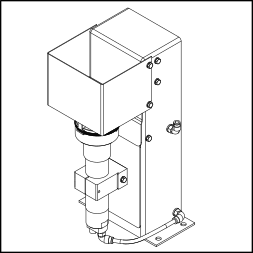
The cleaning device automatically cleans MIG/MAG welding torches, which are used to weld aluminium materials. This device allows you to clean the inside, front and outside of the gas nozzle across a wide range of torch geometries. The result is a significant increase in the service life of wearing parts.
General
General
The cleaning device automatically cleans MIG/MAG welding torches, which are used to weld aluminium materials. This device allows you to clean the inside, front and outside of the gas nozzle across a wide range of torch geometries. The result is a significant increase in the service life of wearing parts.
General
The cleaning device automatically cleans MIG/MAG welding torches, which are used to weld aluminium materials. This device allows you to clean the inside, front and outside of the gas nozzle across a wide range of torch geometries. The result is a significant increase in the service life of wearing parts.
Device concept
A brush head is used to clean the welding torch. The brush head is equipped with different brush types, giving optimal cleaning results. All brushes can be replaced without the need for any tools.
Welding residues are blown away from the welding torch and brush head by two cleaning nozzles.
A stable installation stand is available for the cleaning device.
Application areas
The cleaning device is ideal for use in robot and other automated applications.
The main application areas are:- Automobile and component supply industry
- Equipment construction
- Chemical plant construction
- Machine and tracked vehicle manufacturing
- Construction machinery and special vehicles
Scope of supply
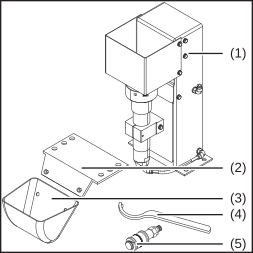
NOTE!
The brush head is not part of the scope of supply.
| (1) | Robacta Reamer brush head cleaning device for aluminium applications |
| (2) | Spatter tray retainer |
| (3) | Spatter tray |
| (4) | Tightening key for cleaning motor |
| (5) | Compressed air relief valve |
Not shown:
| (6) | Harting Han6P connecting plug (X1) without cable |
| (7) | Operating instructions |
| (8) | Fixings for assembling the cleaning device:
|
Options
- Installation stand
- Wire cutter
Warning notices on the cleaning device
NOTE!
The cleaning device is fitted with warning notices and a rating plate.
The warning notices and rating plate must not be removed or painted over.
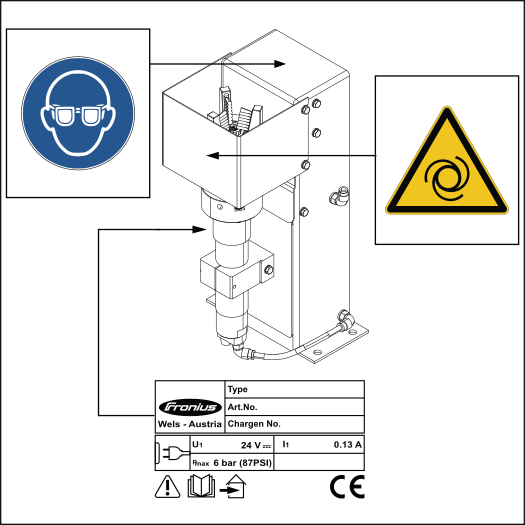
Warning notices on the cleaning device
 | WARNING! Risk of serious injury from:
Keep device free from current and pressure during maintenance and servicing. |
 | Do not use the functions described here until you have thoroughly read and understood the following documents:
|
 | For indoor use only |
 | Wear eye protection |
 | Warning: Automatic start-up |
Transport
Transport means
The device is to be transported by the following means:
- On pallets using a counterbalanced lift truck
- On pallets using a lift truck
- Manually
WARNING!
Danger from falling devices and objects.
This can result in serious injury and damage to property.
Secure the device to prevent it from falling over while being transporting on a counterbalanced lift truck or lift truck.
Avoid sudden changes in direction, braking or acceleration.
Transport means
The device is to be transported by the following means:
- On pallets using a counterbalanced lift truck
- On pallets using a lift truck
- Manually
WARNING!
Danger from falling devices and objects.
This can result in serious injury and damage to property.
Secure the device to prevent it from falling over while being transporting on a counterbalanced lift truck or lift truck.
Avoid sudden changes in direction, braking or acceleration.
Transport notices on the packaging
CAUTION!
Danger due to improper transport.
This can result in damage to property.
Observe the transport notices on the device packaging.
Controls, connections and mechanical components
Safety
Safety
Observe the following safety rules when using all functions described in the "Controls, connections and mechanical components" section.
WARNING!
Danger from incorrect operation!
This can result in serious injury and damage to property.
The functions described must only be used by trained and qualified personnel.
Do not use the functions described here until you have fully read and understood the following documents:
these Operating Instructions,
all the Operating Instructions for the system components, especially the safety rules
Safety
Safety
Observe the following safety rules when using all functions described in the "Controls, connections and mechanical components" section.
WARNING!
Danger from incorrect operation!
This can result in serious injury and damage to property.
The functions described must only be used by trained and qualified personnel.
Do not use the functions described here until you have fully read and understood the following documents:
these Operating Instructions,
all the Operating Instructions for the system components, especially the safety rules
Safety
Observe the following safety rules when using all functions described in the "Controls, connections and mechanical components" section.
WARNING!
Danger from incorrect operation!
This can result in serious injury and damage to property.
The functions described must only be used by trained and qualified personnel.
Do not use the functions described here until you have fully read and understood the following documents:
these Operating Instructions,
all the Operating Instructions for the system components, especially the safety rules
Controls, connections and mechanical components
Control elements, connections and mechanical components
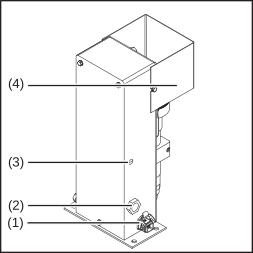
Side view
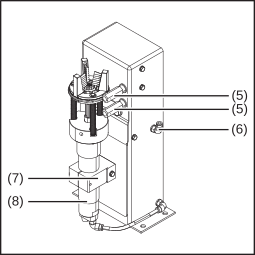
Front view
| No. | Function |
|---|---|
| (1) | Harting Han6P connection socket (X1) for a 24 V DC supply CAUTION!Risk of damage to Harting Han6P connection (X1) supply due to overcurrent. Secure supply against overcurrent with a 500 mA slow-blow fuse. |
| (2) | Compressed air connection for a dry compressed air supply at 6 bar (86.99 psi) Thread identification compressed air connection: G ¼ ″ For more details on compressed air conditions, see section Compressed air supply specifications on page (→) |
| (3) | "Cleaning" screw for manually checking the following functions:
|
| (4) | Protective covering |
| (5) | Cleaning nozzles for cleaning the brush head and welding torch using compressed air |
| (6) | Compressed air connection for the wire cutter option |
| (7) | Lifting device lifts the cleaning motor with the brush head to the cleaning position ready to commence cleaning |
| (8) | Cleaning motor drives the brush head |
Control elements, connections and mechanical components
Side view
Front view
| No. | Function |
|---|---|
| (1) | Harting Han6P connection socket (X1) for a 24 V DC supply CAUTION!Risk of damage to Harting Han6P connection (X1) supply due to overcurrent. Secure supply against overcurrent with a 500 mA slow-blow fuse. |
| (2) | Compressed air connection for a dry compressed air supply at 6 bar (86.99 psi) Thread identification compressed air connection: G ¼ ″ For more details on compressed air conditions, see section Compressed air supply specifications on page (→) |
| (3) | "Cleaning" screw for manually checking the following functions:
|
| (4) | Protective covering |
| (5) | Cleaning nozzles for cleaning the brush head and welding torch using compressed air |
| (6) | Compressed air connection for the wire cutter option |
| (7) | Lifting device lifts the cleaning motor with the brush head to the cleaning position ready to commence cleaning |
| (8) | Cleaning motor drives the brush head |
Harting Han6P connecting plug pin assignment (X1) for robot control
General
CAUTION!
Danger from overcurrent.
Damage to the Harting Han6P connection supply may result.
Secure the power supply of the cleaning device against overcurrent with a 500 mA slow-blow fuse.
NOTE!
To avoid malfunction, keep the cable length between the cleaning device and robot control as short as possible.
The Harting Han6P connecting plug (X1) for connecting the cleaning device to the robot control is included in the scope of supply. The cable harness must be adapted to the connection technology on the robot control.
- Controls, connections and mechanical components
- Harting Han6P connecting plug pin assignment (X1) for robot control
General
CAUTION!
Danger from overcurrent.
Damage to the Harting Han6P connection supply may result.
Secure the power supply of the cleaning device against overcurrent with a 500 mA slow-blow fuse.
NOTE!
To avoid malfunction, keep the cable length between the cleaning device and robot control as short as possible.
The Harting Han6P connecting plug (X1) for connecting the cleaning device to the robot control is included in the scope of supply. The cable harness must be adapted to the connection technology on the robot control.
- Controls, connections and mechanical components
- Harting Han6P connecting plug pin assignment (X1) for robot control
Harting Han6P connecting plug pin assignment (X1)
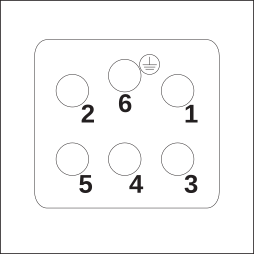
Harting Han6P connecting plug pin assignment (X1) - cable-end view
Input and output signals on the Robacta Reamer Alu brush head:- Start cleaning input signal (cleaning motor ON, lifting device UP, compressed air supply to cleaning nozzles ON)
- Not assigned
- GND
- + 24 V DC
- Cleaning motor DOWN output signal
- Earthing
(see circuit diagrams in appendix)
Installation and commissioning
Safety
Safety
Observe the following safety rules for all work described in the "Installation and start-up" section.
WARNING!
Incorrect operation or poorly executed work can cause serious injury or damage.
All activities described in these operating instructions may only be carried out by trained and qualified personnel. All functions described in these operating instructions may only be used by trained and qualified personnel. Do not carry out any of the work or use any of the functions described until you have fully read and understood the following documents:
these operating instructions
all the operating instructions for the system components, especially the safety rules
WARNING!
Machines that start up automatically can cause serious injury and damage.
In addition to these operating instructions, the safety rules issued by the manufacturer of the robot and welding system must also be observed. For your personal safety, ensure that all protective measures have been taken and will remain in place while you are in the working area of the robot.
WARNING!
Risk of serious injury from:
mechanically powered components
flying parts (shavings, etc.)
compressed air escaping from the cleaning nozzles
Before performing work on the cleaning device or any connected system components:
disconnect the customer's compressed air and power supplies from the cleaning device and the connected system components, and ensure that they remain disconnected until work is complete
ensure that the cleaning device is depressurised - please see the "Ensuring that the cleaning device is depressurised" section below for the relevant instructions
WARNING!
Whenever the cleaning device and connected system components are supplied with voltage and/or compressed air, a risk of serious injury exists from:
rotating brush head
lifting device moving up/down
activated wire cutter
flying parts (shavings, etc.)
compressed air escaping from the cleaning nozzles
If work has to be performed on the cleaning device while it is being supplied with voltage and/or compressed air:
keep your body, especially your hands, face, hair, tools and all clothing away from the brush head, brush head lifting device, wire cutter and cleaning nozzles
wear ear protection
wear protective goggles with side protection
Safety
Safety
Observe the following safety rules for all work described in the "Installation and start-up" section.
WARNING!
Incorrect operation or poorly executed work can cause serious injury or damage.
All activities described in these operating instructions may only be carried out by trained and qualified personnel. All functions described in these operating instructions may only be used by trained and qualified personnel. Do not carry out any of the work or use any of the functions described until you have fully read and understood the following documents:
these operating instructions
all the operating instructions for the system components, especially the safety rules
WARNING!
Machines that start up automatically can cause serious injury and damage.
In addition to these operating instructions, the safety rules issued by the manufacturer of the robot and welding system must also be observed. For your personal safety, ensure that all protective measures have been taken and will remain in place while you are in the working area of the robot.
WARNING!
Risk of serious injury from:
mechanically powered components
flying parts (shavings, etc.)
compressed air escaping from the cleaning nozzles
Before performing work on the cleaning device or any connected system components:
disconnect the customer's compressed air and power supplies from the cleaning device and the connected system components, and ensure that they remain disconnected until work is complete
ensure that the cleaning device is depressurised - please see the "Ensuring that the cleaning device is depressurised" section below for the relevant instructions
WARNING!
Whenever the cleaning device and connected system components are supplied with voltage and/or compressed air, a risk of serious injury exists from:
rotating brush head
lifting device moving up/down
activated wire cutter
flying parts (shavings, etc.)
compressed air escaping from the cleaning nozzles
If work has to be performed on the cleaning device while it is being supplied with voltage and/or compressed air:
keep your body, especially your hands, face, hair, tools and all clothing away from the brush head, brush head lifting device, wire cutter and cleaning nozzles
wear ear protection
wear protective goggles with side protection
Safety
Observe the following safety rules for all work described in the "Installation and start-up" section.
WARNING!
Incorrect operation or poorly executed work can cause serious injury or damage.
All activities described in these operating instructions may only be carried out by trained and qualified personnel. All functions described in these operating instructions may only be used by trained and qualified personnel. Do not carry out any of the work or use any of the functions described until you have fully read and understood the following documents:
these operating instructions
all the operating instructions for the system components, especially the safety rules
WARNING!
Machines that start up automatically can cause serious injury and damage.
In addition to these operating instructions, the safety rules issued by the manufacturer of the robot and welding system must also be observed. For your personal safety, ensure that all protective measures have been taken and will remain in place while you are in the working area of the robot.
WARNING!
Risk of serious injury from:
mechanically powered components
flying parts (shavings, etc.)
compressed air escaping from the cleaning nozzles
Before performing work on the cleaning device or any connected system components:
disconnect the customer's compressed air and power supplies from the cleaning device and the connected system components, and ensure that they remain disconnected until work is complete
ensure that the cleaning device is depressurised - please see the "Ensuring that the cleaning device is depressurised" section below for the relevant instructions
WARNING!
Whenever the cleaning device and connected system components are supplied with voltage and/or compressed air, a risk of serious injury exists from:
rotating brush head
lifting device moving up/down
activated wire cutter
flying parts (shavings, etc.)
compressed air escaping from the cleaning nozzles
If work has to be performed on the cleaning device while it is being supplied with voltage and/or compressed air:
keep your body, especially your hands, face, hair, tools and all clothing away from the brush head, brush head lifting device, wire cutter and cleaning nozzles
wear ear protection
wear protective goggles with side protection
Ensuring that the cleaning device is depressurised
Attempt to briefly activate the cleaning device without any compressed air supply to check whether the cleaning device is depressurised. Proceed as follows:
1Take protective measures:
- The brush head, brush head lifting device, wire cutter and cleaning nozzles could start up. Therefore keep your body, especially your hands, face and hair, any objects and all clothing away from the parts referred to above
- wear ear protection
- wear protective goggles with side protection
2Ensure that the cleaning device has been disconnected from the compressed air supply
3Briefly turn the "Cleaning" screw on the cleaning device 90° to the right, then turn it straight back to its original position
- If the cleaning device does not respond to the turning of the screw, the cleaning device is depressurised
- If the cleaning device responds to the turning of the screw, the cleaning device is still connected to a compressed air supply. If this is the case, you must disconnect the cleaning device from the compressed air supply and check again that the cleaning device is depressurised before starting work
Before commissioning
Operators, maintenance personnel
WARNING!
Risk of machines starting automatically.
This can result in serious injury and damage to property.
The device must only be operated by one person.
Nobody may be in the working area of the device while it is in operation.
The device must only be serviced or maintained by one person.
Nobody else may be within the radius of the device while it is being worked on.
Operators, maintenance personnel
WARNING!
Risk of machines starting automatically.
This can result in serious injury and damage to property.
The device must only be operated by one person.
Nobody may be in the working area of the device while it is in operation.
The device must only be serviced or maintained by one person.
Nobody else may be within the radius of the device while it is being worked on.
Setup regulations
- Protection against penetration by solid foreign bodies with diameters > 12.5 mm (0.49 in.)
- No protection against the ingress of water
The device must not be set up and operated outdoors. The built in electrical parts must be protected from direct wetting.
WARNING!
Danger from machines falling or toppling over.
This can result in serious injury and damage to property.
Always secure the cleaning device to the underlying surface.
Compressed air supply specifications
- Establish compressed air supply using a pressure limiter and compressed air filter
- Provide compressed air quality conforming to ISO 8573-1:2001, class 7 4 3, instrument air
- Solid particle concentration £ 10 mg/m3
- Vapour pressure dew point £ + 3 °C
- Oil concentration £ 1 mg/m3
Measures for the safe operation of the device with untrained personnel
If untrained operators have access to the device, its compressed air supply must be disconnected for the duration of work in accordance with 'Performance Level d' of the ISO 13849-1 standard.
To ensure that the compressed air supply is interrupted as required, MS6-SV pressure build-up and pressure relief valves from FESTO are recommended.
Screwing the cleaning device to the underlying surface
Screwing the cleaning device and installation stand to the underlying surface
WARNING!
Danger from machines falling or toppling over.
This can result in serious injury and damage to property.
Always secure the installation stand to the underlying surface.
The screws for fastening the installation stand are not included in the scope of supply of the installation stand. The installer is responsible for selecting the right type of screws or bolts.
Always secure the cleaning device to the installation stand.
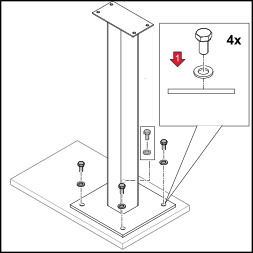
1Place the optionally available installation stand on a level, firm and vibration-free surface (foundation)
- Position the installation stand in such a way that the distance the robot has to travel to the cleaning device on the installation stand is as short as possible
2Tightly screw the installation stand to the surface (foundation) using the selected mounting materials
Screw on the cleaning device and the spatter tray retainer using the fixings supplied with the cleaning device.
3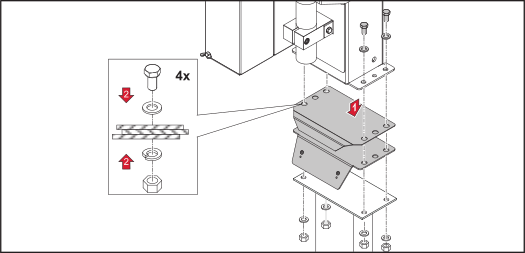
Place components on the installation stand and secure
4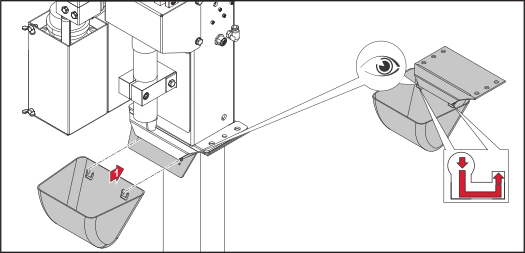
Attach the spatter tray retainer as shown
Screwing the cleaning device and installation stand to the underlying surface
WARNING!
Danger from machines falling or toppling over.
This can result in serious injury and damage to property.
Always secure the installation stand to the underlying surface.
The screws for fastening the installation stand are not included in the scope of supply of the installation stand. The installer is responsible for selecting the right type of screws or bolts.
Always secure the cleaning device to the installation stand.
1Place the optionally available installation stand on a level, firm and vibration-free surface (foundation)
- Position the installation stand in such a way that the distance the robot has to travel to the cleaning device on the installation stand is as short as possible
2Tightly screw the installation stand to the surface (foundation) using the selected mounting materials
Screw on the cleaning device and the spatter tray retainer using the fixings supplied with the cleaning device.
3
Place components on the installation stand and secure
4
Attach the spatter tray retainer as shown
Screwing the cleaning device to the underlying surface
WARNING!
Danger from machines falling or toppling over.
This can result in serious injury and damage to property.
Always secure the cleaning device to the underlying surface.
If the underlying surface thickness is less than 5 mm (0.197 in.), use the fixings supplied with the cleaning device for fastening.
If the underlying surface thickness is greater than 5 mm (0.197 in.), do not use the fixings supplied for fastening. In this situation the installer is responsible for selecting the right type of fixing.
1Place the cleaning device and the spatter tray retainer on a level, firm and vibration-free surface (foundation).
- Position the cleaning device in such a way that the distance the robot has to travel to the cleaning position is as short as possible.
2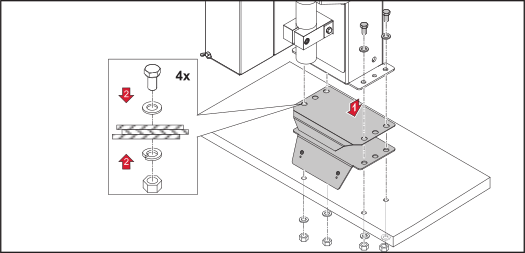
Place components on the underlying surface and secure
3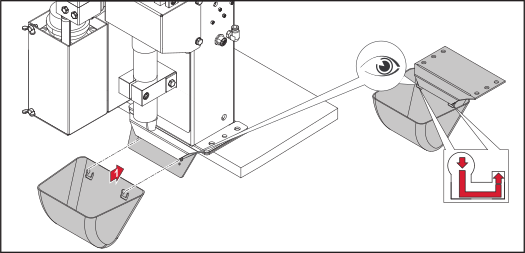
Attach the spatter tray retainer as shown
Adjusting and fitting the standard brush head
General
NOTE!
The following information applies to the use of the manufacturer's contact tips, gas nozzles and brush head.
If other manufacturers' products are used, trouble-free operation of the device cannot be guaranteed. The manufacturer accepts no liability for damage arising from the use of other manufacturers' contact tips, gas nozzles or brush heads.
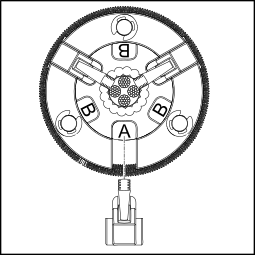
The brush head has two different settings (A and B) to modify the distance between the diagonal brushes according to the type of gas nozzle being used.
NOTE!
The following list of settings is intended as a guide only.
Setting A for:
standard gas nozzles with an outer diameter up to 23 mm (0.91 inch)
Setting B for:
standard gas nozzles with an outer diameter from 24 mm (0.95 inch) upwards
General
NOTE!
The following information applies to the use of the manufacturer's contact tips, gas nozzles and brush head.
If other manufacturers' products are used, trouble-free operation of the device cannot be guaranteed. The manufacturer accepts no liability for damage arising from the use of other manufacturers' contact tips, gas nozzles or brush heads.
The brush head has two different settings (A and B) to modify the distance between the diagonal brushes according to the type of gas nozzle being used.
NOTE!
The following list of settings is intended as a guide only.
Setting A for:
standard gas nozzles with an outer diameter up to 23 mm (0.91 inch)
Setting B for:
standard gas nozzles with an outer diameter from 24 mm (0.95 inch) upwards
Adjusting the brush head
Adjust the brush head as follows:
1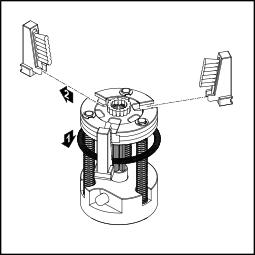
2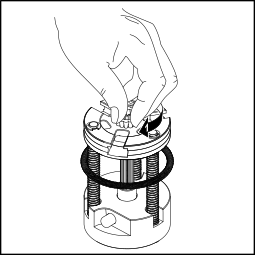
3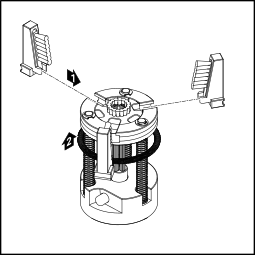
Fitting the brush head
1Remove the protective covering from the cleaning device
2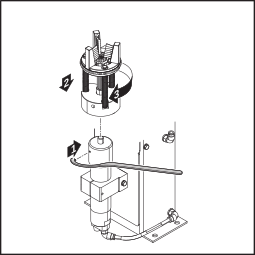
3Fit the protective covering to the cleaning device in its original position
Adjusting and fitting the Braze+ brush head
General
NOTE!
The following information applies to the use of the manufacturer's contact tips, gas nozzles and brush head.
If other manufacturers' products are used, trouble-free operation of the device cannot be guaranteed. The manufacturer accepts no liability for damage arising from the use of other manufacturers' contact tips, gas nozzles or brush heads.
The brush head has two different settings (A and B) to modify the distance between the diagonal brushes according to the type of gas nozzle being used.
General
NOTE!
The following information applies to the use of the manufacturer's contact tips, gas nozzles and brush head.
If other manufacturers' products are used, trouble-free operation of the device cannot be guaranteed. The manufacturer accepts no liability for damage arising from the use of other manufacturers' contact tips, gas nozzles or brush heads.
The brush head has two different settings (A and B) to modify the distance between the diagonal brushes according to the type of gas nozzle being used.
Adjusting the brush head
Adjust the brush head as follows:
1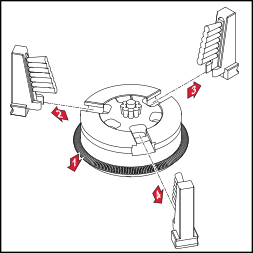
2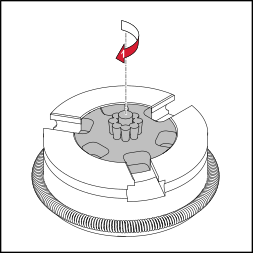
3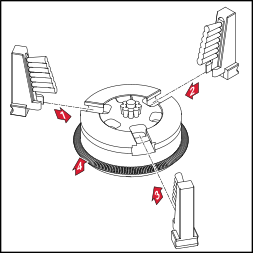
Fitting the brush head
1Remove the protective covering from the cleaning device
2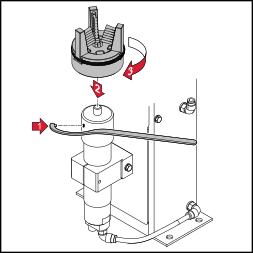
3Fit the protective covering to the cleaning device in its original position
Torch cleaning position
Cleaning position of the welding torch - standard brush head
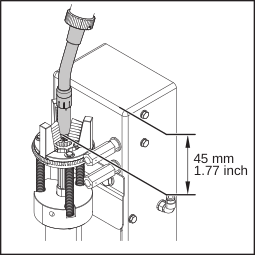
- End of gas nozzle is approx. 45 mm (1.77 in.) beneath upper edge of cleaning device housing, positioned centrally with respect to the cleaning motor
Cleaning position of the welding torch - standard brush head
- End of gas nozzle is approx. 45 mm (1.77 in.) beneath upper edge of cleaning device housing, positioned centrally with respect to the cleaning motor
Cleaning position of the welding torch - Braze+ brush head
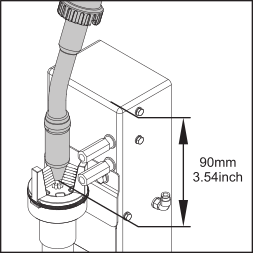
- End of gas nozzle is approx. 90 mm (3.54 in.) beneath upper edge of cleaning device housing, positioned centrally with respect to the cleaning motor
Adjusting the position of the cleaning motor (with standard brush head)
Adjusting the position of the cleaning motor
1Remove the protective covering from the cleaning device
2Ensure that the lifting device (1) is in its lowest position
3Move the welding torch to the cleaning position
4Remove the gas nozzle from the torch body
5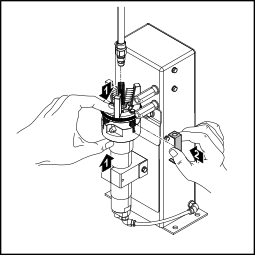
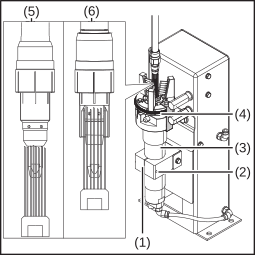
6Loosen screw (2) on the lifting device (1)
7Manually push the lifting device (1) into its highest lift position and hold in place
8Manually push the cleaning motor (3) and brush head (4) into the cleaning position
- see diagram (5) for welding torch with spatter guard
- see diagram (6) for welding torch with insulating sleeve
9Fix the cleaning motor (3) in this position in the lifting device (1) - tighten the screw (2) on the lifting device (1)
10Fit the gas nozzle to the torch body
11Press brush head together and pull off bracket
12Fit the protective covering to the cleaning device in its original position
- Installation and commissioning
- Adjusting the position of the cleaning motor (with standard brush head)
Adjusting the position of the cleaning motor
1Remove the protective covering from the cleaning device
2Ensure that the lifting device (1) is in its lowest position
3Move the welding torch to the cleaning position
4Remove the gas nozzle from the torch body
5
6Loosen screw (2) on the lifting device (1)
7Manually push the lifting device (1) into its highest lift position and hold in place
8Manually push the cleaning motor (3) and brush head (4) into the cleaning position
- see diagram (5) for welding torch with spatter guard
- see diagram (6) for welding torch with insulating sleeve
9Fix the cleaning motor (3) in this position in the lifting device (1) - tighten the screw (2) on the lifting device (1)
10Fit the gas nozzle to the torch body
11Press brush head together and pull off bracket
12Fit the protective covering to the cleaning device in its original position
Adjusting the position of the cleaning motor (with Braze+ brush head)
Adjusting the position of the cleaning motor
1Remove the protective covering from the cleaning device
2Ensure that the lifting device (1) is in its lowest position
3Move the welding torch to the cleaning position
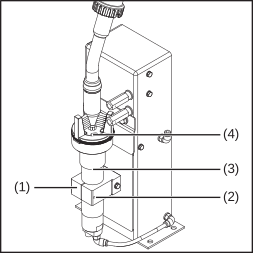
4Loosen screw (2) on the lifting device (1)
5Manually push the lifting device (1) into its highest lift position and hold in place
6Manually push the cleaning motor (3) and brush head (4) into the cleaning position
7Fix the cleaning motor (3) in this position in the lifting device (1) - tighten the screw (2) on the lifting device (1)
8Fit the protective covering to the cleaning device in its original position
Adjusting the position of the cleaning motor
1Remove the protective covering from the cleaning device
2Ensure that the lifting device (1) is in its lowest position
3Move the welding torch to the cleaning position
4Loosen screw (2) on the lifting device (1)
5Manually push the lifting device (1) into its highest lift position and hold in place
6Manually push the cleaning motor (3) and brush head (4) into the cleaning position
7Fix the cleaning motor (3) in this position in the lifting device (1) - tighten the screw (2) on the lifting device (1)
8Fit the protective covering to the cleaning device in its original position
Installation and function of mechanically-controlled wire cutter (option)
How the mechanically controlled wire cutter works
NOTE!
If you change over to a new welding torch, the mechanically controlled wire cutter must be reset!
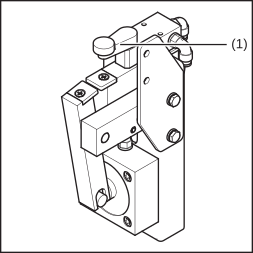
If a torch body pushes the valve lever (1) to the side by more than 15° with the gas nozzle, the wire cutter is activated and the wire electrode is cut.
NOTE!
The wire electrode is cut while the torch body is moving.
- Installation and commissioning
- Installation and function of mechanically-controlled wire cutter (option)
How the mechanically controlled wire cutter works
NOTE!
If you change over to a new welding torch, the mechanically controlled wire cutter must be reset!
If a torch body pushes the valve lever (1) to the side by more than 15° with the gas nozzle, the wire cutter is activated and the wire electrode is cut.
NOTE!
The wire electrode is cut while the torch body is moving.
- Installation and commissioning
- Installation and function of mechanically-controlled wire cutter (option)
Maximum wire diameter
Wire electrodes with a diameter of up to 1.6 mm (0.063 in.) can be cut by the wire cutter.
- Installation and commissioning
- Installation and function of mechanically-controlled wire cutter (option)
Installing the mechanically-controlled wire cutter
1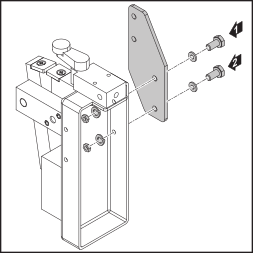
NOTE!
Use the fixings supplied with the wire cutter for the assembly shown.
2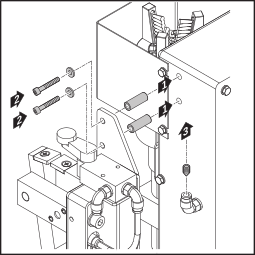
NOTE!
Use the fixings supplied with the wire cutter for the assembly shown.
3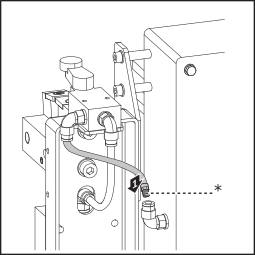
| * | Use a suitable adapter to connect the wire cutter compressed air hose to the cleaning device. |
Installation and function of electrically-controlled wire cutter (option)
How the electrically-controlled wire cutter works
The electrically-controlled wire cutter opens and closes when there is an active signal from the robot control.
- Installation and commissioning
- Installation and function of electrically-controlled wire cutter (option)
How the electrically-controlled wire cutter works
The electrically-controlled wire cutter opens and closes when there is an active signal from the robot control.
- Installation and commissioning
- Installation and function of electrically-controlled wire cutter (option)
Maximum wire diameter
Wire electrodes with a diameter of up to 1.6 mm (0.063 in.) can be cut by the wire cutter.
- Installation and commissioning
- Installation and function of electrically-controlled wire cutter (option)
Installing the electrically-controlled wire cutter
NOTE!
Use the fixings supplied with the wire cutter for the work described below.
1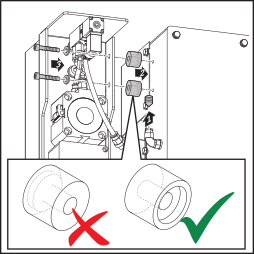
Ensure that the recesses in the spacers face the cleaning device.
2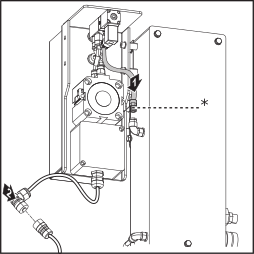
| * | Use supplied adapter to connect the wire cutter compressed air hose to the cleaning device. |
NOTE!
The wire cutter must be controlled electrically by the robot control.
Installing the compressed air supply
Establishing the compressed air supply for the cleaning device, function of the compressed air relief valve
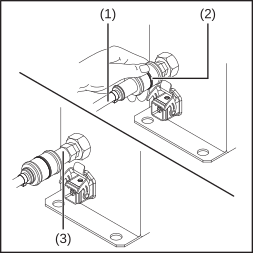 Function of the compressed air relief valve |
| To establish the compressed air supply: 1Depressurise the compressed air supply line (1) and ensure that it remains depressurised for the duration of the work on the device 2Screw the supplied compressed air relief valve tightly to the compressed air connection on the cleaning device 3Connect the compressed air supply line (1) to the compressed air relief valve
|
Establishing the compressed air supply for the cleaning device, function of the compressed air relief valve
Function of the compressed air relief valve |
| To establish the compressed air supply: 1Depressurise the compressed air supply line (1) and ensure that it remains depressurised for the duration of the work on the device 2Screw the supplied compressed air relief valve tightly to the compressed air connection on the cleaning device 3Connect the compressed air supply line (1) to the compressed air relief valve
|
Manually checking the cleaning device functions
Safety
WARNING!
For the following tasks, the cleaning device must be supplied with compressed air. This results in danger from the rotating cleaning cutter, cleaning motor moving up/down, gas nozzle clamping device moving out/in, flying parts (chips, etc.), compressed air/parting agent mixture escaping from the parting-agent injection nozzle.
This can result in serious injury and damage to property.
Keep your body, especially your hands, face, hair, any objects and all clothing awayfrom the cleaning cutter, cleaning motor, lifting device, gas nozzle clamping device,wire cutter and parting-agent injection nozzle..
Wear ear protection!
Wear protective goggles with side protection.
Safety
WARNING!
For the following tasks, the cleaning device must be supplied with compressed air. This results in danger from the rotating cleaning cutter, cleaning motor moving up/down, gas nozzle clamping device moving out/in, flying parts (chips, etc.), compressed air/parting agent mixture escaping from the parting-agent injection nozzle.
This can result in serious injury and damage to property.
Keep your body, especially your hands, face, hair, any objects and all clothing awayfrom the cleaning cutter, cleaning motor, lifting device, gas nozzle clamping device,wire cutter and parting-agent injection nozzle..
Wear ear protection!
Wear protective goggles with side protection.
Checking functions manually
NOTE!
Functions are deactivated if the slot on the "Cleaning" screw is horizontal.
- function of the cleaning motor (cleaning motor OFF/ON)
- correct setting of the cleaning motor (lifting device moves UP/DOWN)
- Standard brush head: for more details, see section Adjusting the position of the cleaning motor (with standard brush head) from page (→)
- Braze+ brush head: for more details, see section Adjusting the position of the cleaning motor (with Braze+ brush head) from page (→)
- function of the cleaning nozzles (compressed air emerges from cleaning nozzles)
1Establish the compressed air supply to the welding torch cleaning device
2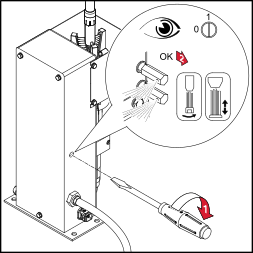
Checking functions manually
3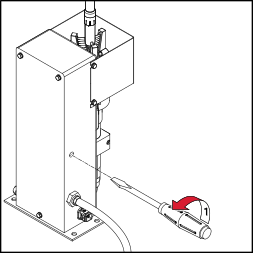
Deactivating the functions
Starting up the cleaning device
Prerequisites for start-up
- If present, the cleaning device installation stand is screwed to the underlying surface
- The cleaning device is screwed to the underlying surface
- Brush head is fitted
- Position of the cleaning motor has been set
- Compressed air supply has been established
- Functions have been checked manually
- Cleaning device is connected to the robot control
- All coverings are fitted and all safety devices are intact and in their proper place
Prerequisites for start-up
- If present, the cleaning device installation stand is screwed to the underlying surface
- The cleaning device is screwed to the underlying surface
- Brush head is fitted
- Position of the cleaning motor has been set
- Compressed air supply has been established
- Functions have been checked manually
- Cleaning device is connected to the robot control
- All coverings are fitted and all safety devices are intact and in their proper place
Start-up
The cleaning device starts up when there is an active signal from the robot control.
Cleaning program and signals
Safety
CAUTION!
Danger due to improper commissioning.
This can result in damage to property.
Only start automatic mode once the cleaning device has been installed and commissioned properly.
Safety
CAUTION!
Danger due to improper commissioning.
This can result in damage to property.
Only start automatic mode once the cleaning device has been installed and commissioned properly.
Cleaning program sequence
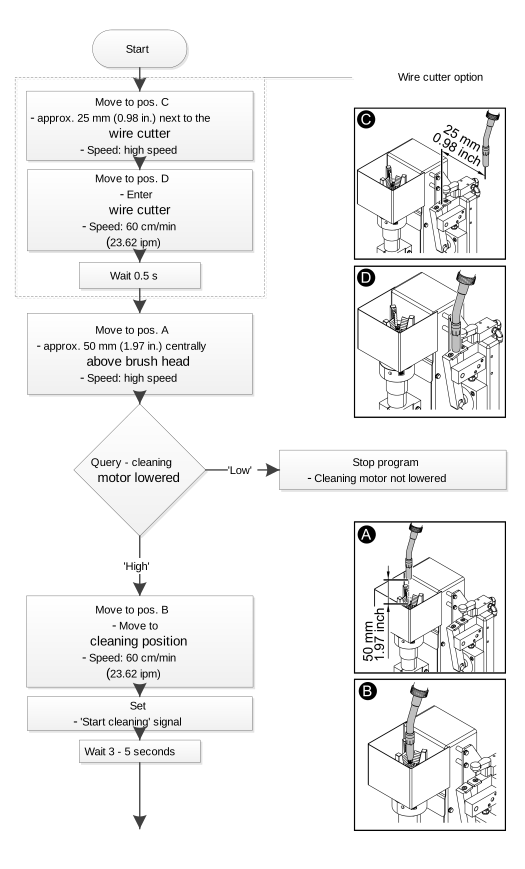
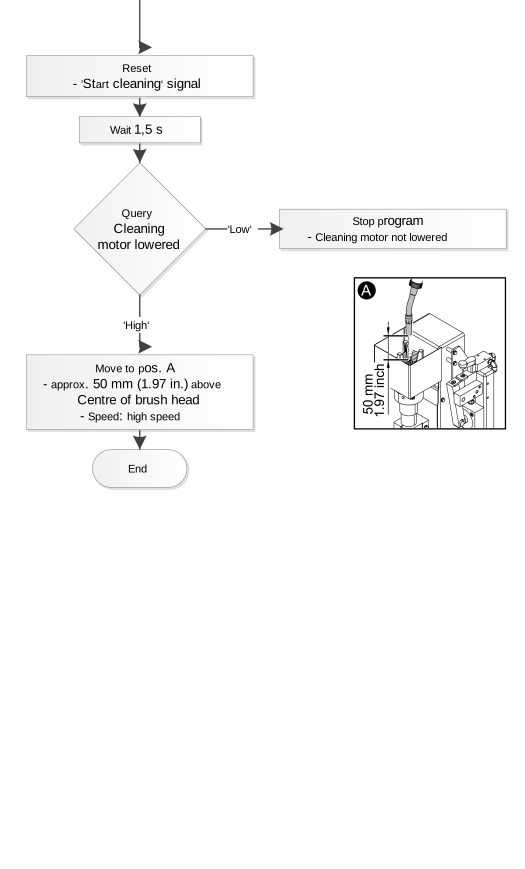
Signal inputs and outputs
Signal input „start cleaning (cleaning motor ON, lifting device UP, compressed air supply to cleaning nozzles ON)“:

Signal output „cleaning motor down“:
Care, maintenance and disposal
Safety
Safety
Observe the following safety rules for all work described in the "Care, maintenance and disposal" section.
WARNING!
Incorrect operation or poorly executed work can cause serious injury or damage.
All activities described in these operating instructions may only be carried out by trained and qualified personnel. All functions described in these operating instructions may only be used by trained and qualified personnel. Do not carry out any of the work or use any of the functions described until you have fully read and understood the following documents:
these operating instructions
all the operating instructions for the system components, especially the safety rules
WARNING!
Machines that start up automatically can cause serious injury and damage.
In addition to these operating instructions, the safety rules issued by the manufacturer of the robot and welding system must also be observed. For your personal safety, ensure that all protective measures have been taken and will remain in place while you are in the working area of the robot.
WARNING!
Risk of serious injury from:
mechanically powered components
flying parts (shavings, etc.)
compressed air escaping from the cleaning nozzles
Before performing work on the cleaning device or any connected system components:
disconnect the customer's compressed air and power supplies from the cleaning device and the connected system components, and ensure that they remain disconnected until work is complete
ensure that the cleaning device is depressurised - please see the "Ensuring that the cleaning device is depressurised" section below for the relevant instructions
WARNING!
Whenever the cleaning device and connected system components are supplied with voltage and/or compressed air, a risk of serious injury exists from:
rotating brush head
lifting device moving up/down
activated wire cutter
flying parts (shavings, etc.)
compressed air escaping from the cleaning nozzles
If work has to be performed on the cleaning device while it is being supplied with voltage and/or compressed air:
keep your body, especially your hands, face, hair, tools and all clothing away from the brush head, brush head lifting device, wire cutter and cleaning nozzles
wear ear protection
wear protective goggles with side protection
Safety
Safety
Observe the following safety rules for all work described in the "Care, maintenance and disposal" section.
WARNING!
Incorrect operation or poorly executed work can cause serious injury or damage.
All activities described in these operating instructions may only be carried out by trained and qualified personnel. All functions described in these operating instructions may only be used by trained and qualified personnel. Do not carry out any of the work or use any of the functions described until you have fully read and understood the following documents:
these operating instructions
all the operating instructions for the system components, especially the safety rules
WARNING!
Machines that start up automatically can cause serious injury and damage.
In addition to these operating instructions, the safety rules issued by the manufacturer of the robot and welding system must also be observed. For your personal safety, ensure that all protective measures have been taken and will remain in place while you are in the working area of the robot.
WARNING!
Risk of serious injury from:
mechanically powered components
flying parts (shavings, etc.)
compressed air escaping from the cleaning nozzles
Before performing work on the cleaning device or any connected system components:
disconnect the customer's compressed air and power supplies from the cleaning device and the connected system components, and ensure that they remain disconnected until work is complete
ensure that the cleaning device is depressurised - please see the "Ensuring that the cleaning device is depressurised" section below for the relevant instructions
WARNING!
Whenever the cleaning device and connected system components are supplied with voltage and/or compressed air, a risk of serious injury exists from:
rotating brush head
lifting device moving up/down
activated wire cutter
flying parts (shavings, etc.)
compressed air escaping from the cleaning nozzles
If work has to be performed on the cleaning device while it is being supplied with voltage and/or compressed air:
keep your body, especially your hands, face, hair, tools and all clothing away from the brush head, brush head lifting device, wire cutter and cleaning nozzles
wear ear protection
wear protective goggles with side protection
Safety
Observe the following safety rules for all work described in the "Care, maintenance and disposal" section.
WARNING!
Incorrect operation or poorly executed work can cause serious injury or damage.
All activities described in these operating instructions may only be carried out by trained and qualified personnel. All functions described in these operating instructions may only be used by trained and qualified personnel. Do not carry out any of the work or use any of the functions described until you have fully read and understood the following documents:
these operating instructions
all the operating instructions for the system components, especially the safety rules
WARNING!
Machines that start up automatically can cause serious injury and damage.
In addition to these operating instructions, the safety rules issued by the manufacturer of the robot and welding system must also be observed. For your personal safety, ensure that all protective measures have been taken and will remain in place while you are in the working area of the robot.
WARNING!
Risk of serious injury from:
mechanically powered components
flying parts (shavings, etc.)
compressed air escaping from the cleaning nozzles
Before performing work on the cleaning device or any connected system components:
disconnect the customer's compressed air and power supplies from the cleaning device and the connected system components, and ensure that they remain disconnected until work is complete
ensure that the cleaning device is depressurised - please see the "Ensuring that the cleaning device is depressurised" section below for the relevant instructions
WARNING!
Whenever the cleaning device and connected system components are supplied with voltage and/or compressed air, a risk of serious injury exists from:
rotating brush head
lifting device moving up/down
activated wire cutter
flying parts (shavings, etc.)
compressed air escaping from the cleaning nozzles
If work has to be performed on the cleaning device while it is being supplied with voltage and/or compressed air:
keep your body, especially your hands, face, hair, tools and all clothing away from the brush head, brush head lifting device, wire cutter and cleaning nozzles
wear ear protection
wear protective goggles with side protection
Ensuring that the cleaning device is depressurised
Attempt to briefly activate the cleaning device without any compressed air supply to check whether the cleaning device is depressurised. Proceed as follows:
1Take protective measures:
- The brush head, brush head lifting device, wire cutter and cleaning nozzles could start up. Therefore keep your body, especially your hands, face and hair, any objects and all clothing away from the parts referred to above
- wear ear protection
- wear protective goggles with side protection
2Ensure that the cleaning device has been disconnected from the compressed air supply
3Briefly turn the "Cleaning" screw on the cleaning device 90° to the right, then turn it straight back to its original position
- If the cleaning device does not respond to the turning of the screw, the cleaning device is depressurised
- If the cleaning device responds to the turning of the screw, the cleaning device is still connected to a compressed air supply. If this is the case, you must disconnect the cleaning device from the compressed air supply and check again that the cleaning device is depressurised before starting work
Care, maintenance and disposal
General
The cleaning device generally needs no maintenance. However, to keep the cleaning device in good working condition for years to come, several points on care and maintenance must be observed.
General
The cleaning device generally needs no maintenance. However, to keep the cleaning device in good working condition for years to come, several points on care and maintenance must be observed.
Before each start-up
- Check the cleaning brushes on the brush head and replace worn brushes
- Empty the cleaning device spatter tray
- If fitted, empty the wire cutter tray
- Carry out a general visual inspection of the cleaning device and wire cutter
Daily
- Remove any dirt deposits from device
Every 6 months
1Open the device and check the pneumatic valves for
- Leaks
- The secure seating of all screws
- The secure seating of all screw joints on the pneumatic valves
As necessary
Open the device and
1Clean inside of device using dry reduced compressed air
2Lightly oil the lifting device cylinder guides
3Restore the original condition of the device
Changing the end brushes (standard brush head only)
1Remove the protective covering from the cleaning device
2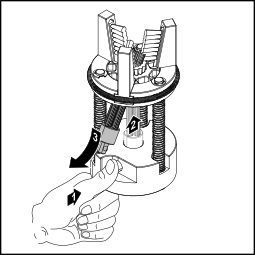
3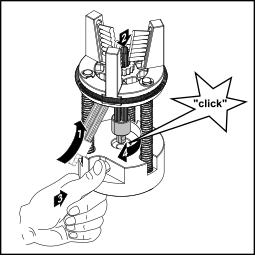
4Fit the protective covering to the cleaning device in its original position
Changing the round brush
NOTE!
In the process described below for changing the round brush, a standard brush head is shown.
The process is identical for aBraze+ brush head.
NOTE!
Before changing the brush, note the setting of the brush head (A or B) and be sure to use this setting during assembly.
This will ensure that the correct clearance is maintained between the diagonal brushes after the brush has been changed.
1Remove the protective covering from the cleaning device
2
3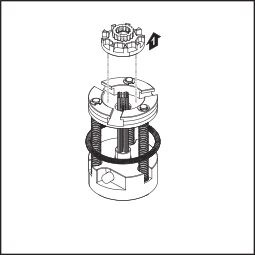
4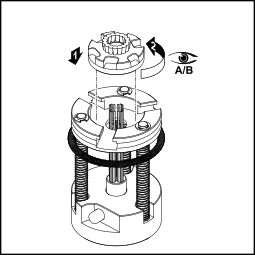
5
6Fit the protective covering to the cleaning device in its original position
Changing the diagonal brushes
NOTE!
In the process described below for changing a diagonal brush, a standard brush head is shown.
The process is identical for aBraze+ brush head.
NOTE!
Before changing the brushes, note the setting of the brush head (A or B) and be sure to use this setting during assembly.
This will ensure that the correct clearance is maintained between the diagonal brushes after the brush has been changed.
1Remove the protective covering from the cleaning device
2
3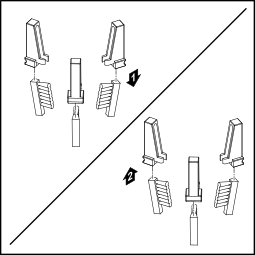
4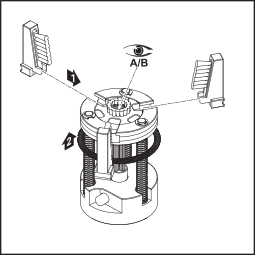
5Fit the protective covering to the cleaning device in its original position
Disposal
Dispose of in accordance with the applicable national and local regulations.
Troubleshooting
Safety
Safety
Observe the following safety rules for all work described in the "Troubleshooting" section.
WARNING!
Incorrect operation or poorly executed work can cause serious injury or damage.
All activities described in these operating instructions may only be carried out by trained and qualified personnel. All functions described in these operating instructions may only be used by trained and qualified personnel. Do not carry out any of the work or use any of the functions described until you have fully read and understood the following documents:
these operating instructions
all the operating instructions for the system components, especially the safety rules
WARNING!
Machines that start up automatically can cause serious injury and damage.
In addition to these operating instructions, the safety rules issued by the manufacturer of the robot and welding system must also be observed. For your personal safety, ensure that all protective measures have been taken and will remain in place while you are in the working area of the robot.
WARNING!
Risk of serious injury from:
mechanically powered components
flying parts (shavings, etc.)
compressed air escaping from the cleaning nozzles
Before performing work on the cleaning device or any connected system components:
disconnect the customer's compressed air and power supplies from the cleaning device and the connected system components, and ensure that they remain disconnected until work is complete
ensure that the cleaning device is depressurised - please see the "Ensuring that the cleaning device is depressurised" section below for the relevant instructions
WARNING!
Whenever the cleaning device and connected system components are supplied with voltage and/or compressed air, a risk of serious injury exists from:
rotating brush head
lifting device moving up/down
activated wire cutter
flying parts (shavings, etc.)
compressed air escaping from the cleaning nozzles
If work has to be performed on the cleaning device while it is being supplied with voltage and/or compressed air:
keep your body, especially your hands, face, hair, tools and all clothing away from the brush head, brush head lifting device, wire cutter and cleaning nozzles
wear ear protection
wear protective goggles with side protection
Safety
Safety
Observe the following safety rules for all work described in the "Troubleshooting" section.
WARNING!
Incorrect operation or poorly executed work can cause serious injury or damage.
All activities described in these operating instructions may only be carried out by trained and qualified personnel. All functions described in these operating instructions may only be used by trained and qualified personnel. Do not carry out any of the work or use any of the functions described until you have fully read and understood the following documents:
these operating instructions
all the operating instructions for the system components, especially the safety rules
WARNING!
Machines that start up automatically can cause serious injury and damage.
In addition to these operating instructions, the safety rules issued by the manufacturer of the robot and welding system must also be observed. For your personal safety, ensure that all protective measures have been taken and will remain in place while you are in the working area of the robot.
WARNING!
Risk of serious injury from:
mechanically powered components
flying parts (shavings, etc.)
compressed air escaping from the cleaning nozzles
Before performing work on the cleaning device or any connected system components:
disconnect the customer's compressed air and power supplies from the cleaning device and the connected system components, and ensure that they remain disconnected until work is complete
ensure that the cleaning device is depressurised - please see the "Ensuring that the cleaning device is depressurised" section below for the relevant instructions
WARNING!
Whenever the cleaning device and connected system components are supplied with voltage and/or compressed air, a risk of serious injury exists from:
rotating brush head
lifting device moving up/down
activated wire cutter
flying parts (shavings, etc.)
compressed air escaping from the cleaning nozzles
If work has to be performed on the cleaning device while it is being supplied with voltage and/or compressed air:
keep your body, especially your hands, face, hair, tools and all clothing away from the brush head, brush head lifting device, wire cutter and cleaning nozzles
wear ear protection
wear protective goggles with side protection
Safety
Observe the following safety rules for all work described in the "Troubleshooting" section.
WARNING!
Incorrect operation or poorly executed work can cause serious injury or damage.
All activities described in these operating instructions may only be carried out by trained and qualified personnel. All functions described in these operating instructions may only be used by trained and qualified personnel. Do not carry out any of the work or use any of the functions described until you have fully read and understood the following documents:
these operating instructions
all the operating instructions for the system components, especially the safety rules
WARNING!
Machines that start up automatically can cause serious injury and damage.
In addition to these operating instructions, the safety rules issued by the manufacturer of the robot and welding system must also be observed. For your personal safety, ensure that all protective measures have been taken and will remain in place while you are in the working area of the robot.
WARNING!
Risk of serious injury from:
mechanically powered components
flying parts (shavings, etc.)
compressed air escaping from the cleaning nozzles
Before performing work on the cleaning device or any connected system components:
disconnect the customer's compressed air and power supplies from the cleaning device and the connected system components, and ensure that they remain disconnected until work is complete
ensure that the cleaning device is depressurised - please see the "Ensuring that the cleaning device is depressurised" section below for the relevant instructions
WARNING!
Whenever the cleaning device and connected system components are supplied with voltage and/or compressed air, a risk of serious injury exists from:
rotating brush head
lifting device moving up/down
activated wire cutter
flying parts (shavings, etc.)
compressed air escaping from the cleaning nozzles
If work has to be performed on the cleaning device while it is being supplied with voltage and/or compressed air:
keep your body, especially your hands, face, hair, tools and all clothing away from the brush head, brush head lifting device, wire cutter and cleaning nozzles
wear ear protection
wear protective goggles with side protection
Ensuring that the cleaning device is depressurised
Attempt to briefly activate the cleaning device without any compressed air supply to check whether the cleaning device is depressurised. Proceed as follows:
1Take protective measures:
- The brush head, brush head lifting device, wire cutter and cleaning nozzles could start up. Therefore keep your body, especially your hands, face and hair, any objects and all clothing away from the parts referred to above
- wear ear protection
- wear protective goggles with side protection
2Ensure that the cleaning device has been disconnected from the compressed air supply
3Briefly turn the "Cleaning" screw on the cleaning device 90° to the right, then turn it straight back to its original position
- If the cleaning device does not respond to the turning of the screw, the cleaning device is depressurised
- If the cleaning device responds to the turning of the screw, the cleaning device is still connected to a compressed air supply. If this is the case, you must disconnect the cleaning device from the compressed air supply and check again that the cleaning device is depressurised before starting work
Troubleshooting
Errors in program sequence
Errors in program sequence
Welding torch is poorly cleaned or damaged
| Cause: | Position of the cleaning motor has been set incorrectly |
| Remedy: | Adjust the position of the cleaning motor |
| Cause: | Worn cleaning brushes on cleaning head |
| Remedy: | Replace cleaning brushes on cleaning head |
Lifting device is not moving up or down
| Cause: | Compressed air relief valve closed |
| Remedy: | Open compressed air relief valve |
| Cause: | No signal from robot |
| Remedy: | Check connection to robot control |
| Cause: | Mechanical fault on solenoid valve |
| Remedy: | Contact After-Sales Service (arrange for solenoid valve to be replaced) |
| Cause: | Choke valve not adjustable, or faulty |
| Remedy: | Contact After-Sales Service (arrange for choke valve to be replaced) |
| Cause: | Faulty sealing in lifting cylinder |
| Remedy: | Contact After-Sales Service (arrange for lifting cylinder to be replaced) |
Cleaning motor does not work
| Cause: | Compressed air relief valve closed |
| Remedy: | Open compressed air relief valve |
| Cause: | No signal from robot |
| Remedy: | Check connection to robot control |
| Cause: | Mechanical fault on cleaning motor |
| Remedy: | Contact After-Sales Service (arrange for cleaning motor to be replaced) |
| Cause: | Mechanical fault on solenoid valve |
| Remedy: | Contact After-Sales Service (arrange for solenoid valve to be replaced) |
Technical data
Technical data
Robacta Reamer brush head for aluminium applications
Supply voltage | + 24 V DC |
Nominal output | 2.4 W |
Nominal pressure | 6 bar |
Air consumption | 420 l/min |
Thread identification compressed air connection | G ¼ ″ |
Max. noise emission (LWA) | 82 dB (A) |
Standard I/O | Input: + 24 V DC/ max. 100 mA |
Cleaning time | 3.0 - 5.0 s |
Total cycle time | 4.0 - 7.5 s |
Degree of protection | IP 21 |
Mark of conformity | CE, CSA |
Safety symbols | S |
Dimensions l x w x h | 165 x 245 x 350 mm |
Weight | 10 kg |
Technical data
Robacta Reamer brush head for aluminium applications
Supply voltage | + 24 V DC |
Nominal output | 2.4 W |
Nominal pressure | 6 bar |
Air consumption | 420 l/min |
Thread identification compressed air connection | G ¼ ″ |
Max. noise emission (LWA) | 82 dB (A) |
Standard I/O | Input: + 24 V DC/ max. 100 mA |
Cleaning time | 3.0 - 5.0 s |
Total cycle time | 4.0 - 7.5 s |
Degree of protection | IP 21 |
Mark of conformity | CE, CSA |
Safety symbols | S |
Dimensions l x w x h | 165 x 245 x 350 mm |
Weight | 10 kg |
Robacta Reamer brush head for aluminium applications
Supply voltage | + 24 V DC |
Nominal output | 2.4 W |
Nominal pressure | 6 bar |
Air consumption | 420 l/min |
Thread identification compressed air connection | G ¼ ″ |
Max. noise emission (LWA) | 82 dB (A) |
Standard I/O | Input: + 24 V DC/ max. 100 mA |
Cleaning time | 3.0 - 5.0 s |
Total cycle time | 4.0 - 7.5 s |
Degree of protection | IP 21 |
Mark of conformity | CE, CSA |
Safety symbols | S |
Dimensions l x w x h | 165 x 245 x 350 mm |
Weight | 10 kg |
Appendix
Circuit diagram: Robacta Reamer brush head for aluminium applications
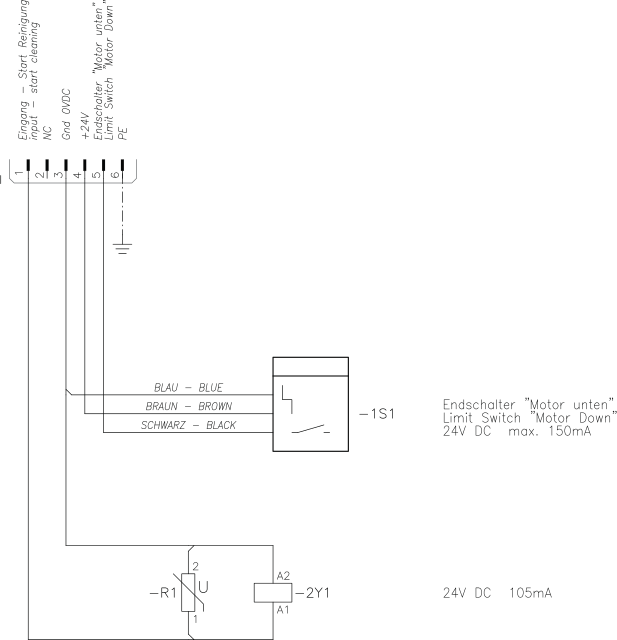
Circuit diagram: Robacta Reamer brush head for aluminium applications
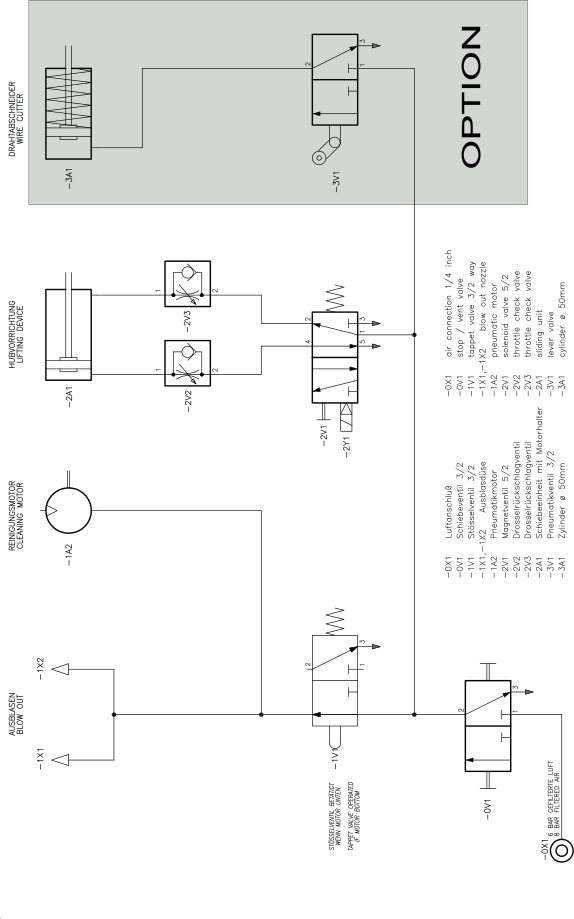
Pneumatics diagram of Robacta Reamer brush head for aluminium applications
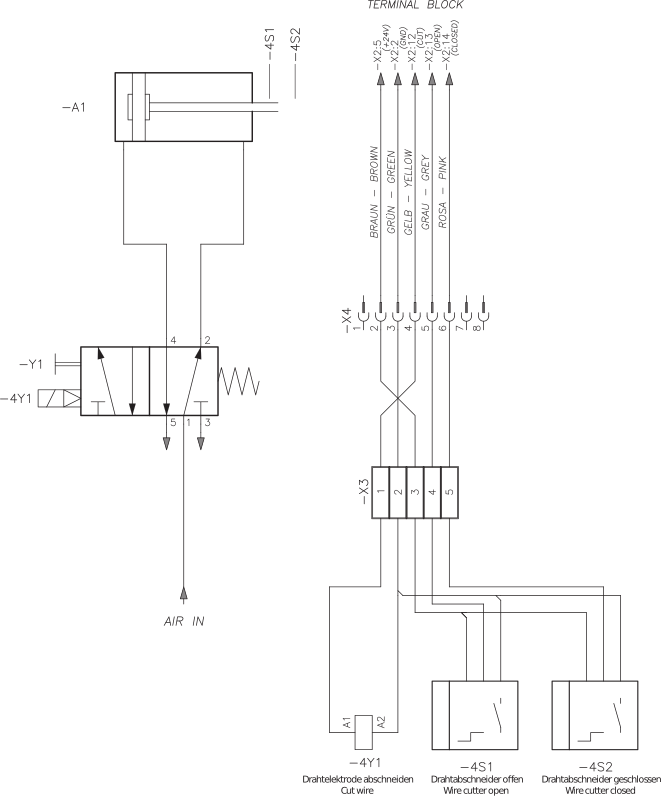
Circuit diagram: Wire cutter
Declaration of conformity